
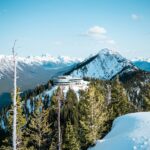
Yes, you can visit Lake Louise and Moraine Lake in one day and enjoy both. For a first visit to Banff, book a morning shuttle to Moraine, walk up to the Rockpile, then spend the afternoon at Lake Louise. Moraine Lake Road is closed to private cars on ordinary day visits, so transport is the part to settle first. After that, a shore walk and lunch can be plenty, with canoeing or a hike for a longer day.
⚠️ Moraine Lake is closed for the season. The last day to visit was October 12, 2026, and Parks Canada’s shuttles are back in summer 2027. Lake Louise stays open all winter, so you can still spend a day at the lakeshore, and our Banff in winter guide has ideas for the rest of your trip.
Your two-lake visit at a glance
- Driving: you can drive to Lake Louise; ordinary day visitors reach Moraine Lake by shuttle or other permitted transport.
- Regular Parks Canada starting point: Lake Louise Park & Ride at the ski resort, across the highway from the lakes.
- Between the lakes: the Lake Connector comes with an eligible Parks Canada ticket or Roam Reservable Super Pass. You’ll need one of these to board.
- Moraine shuttle season: normally June 1 to Thanksgiving Monday (the second Monday in October), weather permitting. Lake Louise service started May 15 in 2026.
- Suggested time: give the lakes most of a day, starting with roughly two hours at each before adding a long hike or canoe rental.
- Cost: the Parks Canada shuttle is CA$12.75 per adult plus CA$3.50 per online booking. Parking at Lake Louise lakeshore instead of the Park & Ride costs CA$42/day for that lake alone—Moraine still needs a shuttle or other permitted ride. Full cost breakdown below.
- Pack: lunch, drinking water, layers and saved tickets. Moraine Lake has no public running water or cell service.
As of September 2026
At Lake Louise, your eye follows the water towards Victoria Glacier. The chateau sits beside you; the tea-house trails head uphill into the trees. Moraine feels more enclosed, with the Ten Peaks rising around the water and the Rockpile gathering that whole view into one frame.
If you’re still looking for seats, the Parks Canada shuttle booking details cover release dates, reservations and alternatives when your first choice sells out.
Can You Drive From Lake Louise to Moraine Lake?
No, you can’t drive your own car between the lakes on a normal day visit. Moraine Lake Road has been closed to personal vehicles since 2023. Registered Moraine Lake Lodge guests have a separate access arrangement; everyone else needs to plan around the permitted transport options. That includes visitors with rental cars, restaurant plans or accessible parking placards.
The connecting route heads back along Lake Louise Drive to the Moraine Lake Road junction, then climbs towards Moraine. That part of the trip needs a shuttle or another permitted option. Driving to Lake Louise itself is still possible, with parking and traffic controls to consider. For a two-lake day, though, the regular Parks Canada shuttle from the ski resort saves you the search for a lakeshore space.
💡 Tip: “Lake Louise” can mean three different places. The village has shops, accommodation and the visitor centre; the lakeshore is beside Fairmont Chateau Lake Louise; the Park & Ride is at Lake Louise Ski Resort, at 1 Whitehorn Road, across the highway from the lakes. Save the pickup location on your booking the night before.
How Do You Travel Between Lake Louise and Moraine Lake?
Take the Lake Connector if you’re travelling with an eligible Parks Canada ticket or Roam Reservable Super Pass. It lets you spend time at one lake, then move to the other when you’re ready. Commercial shuttles and tours offer their own two-lake trips, with stops and return pickups set by the operator.
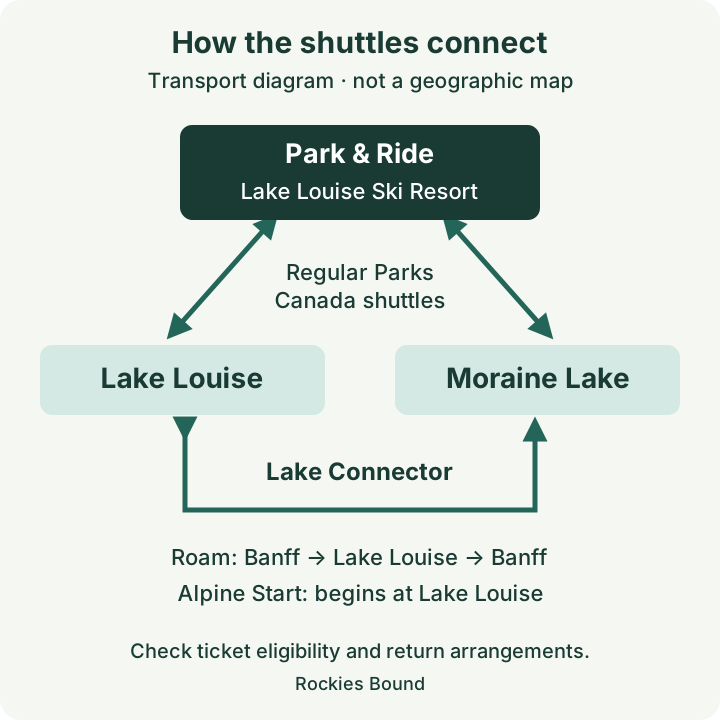
| Option | Starting point | How the two-lake visit works | What to know before booking |
|---|---|---|---|
| Regular Parks Canada shuttle | Lake Louise Park & Ride | Your reserved first lake, then the Connector, then a return from either lake to the Park & Ride. | Check in at the Park & Ride during your reserved window. |
| Roam Reservable Super Pass | Banff, on Route 8X | Arrive at Lake Louise, use the Connector for Moraine, and return to Lake Louise for your Banff bus. | Book the Super Pass in advance; a regular 8X fare covers Lake Louise only. |
| Licensed shuttle or tour | The operator’s stated pickup | Some bookings visit both lakes; others serve Moraine only. | Check your time at each lake and the return pickup. Connector access needs a separate eligible ticket. |
| Bicycle | Your planned route and a place you’re allowed to park | A self-supported ride on mountain roads. | Expect traffic, climbing and a return ride on mountain roads. |
Using the Lake Connector
With a regular Parks Canada reservation, check in at the Park & Ride, collect your boarding pass and take the shuttle to the lake named on your booking. Keep that pass for the Connector and the ride back. Changing lakes is the flexible part: join the queue by the Parks Canada tents whenever you’re ready, with no second departure to book.
The 2026 Connector runs every 30 minutes from 7 a.m. to 6 p.m. during Moraine’s operating season. The last Park & Ride returns leave later, at 7:30 p.m. It helps to think about where you’re finishing: Parks Canada passengers with cars at the ski resort want the Park & Ride bus; Roam passengers and anyone parked at Lake Louise need to get back to the lakeshore.
A full bus may leave before your turn comes. Parks Canada advises allowing at least 30 minutes of waiting, rising to an hour when it’s busy. Before wandering off, ask staff which queue you’ll need for the return and photograph the day’s departure information.
The official lake transport page has the schedules. It’s worth another look close to your visit, especially around the first and last weeks of the season.
Coming from Banff or Canmore without a car
If you’re staying in Banff, the Roam Reservable Super Pass is a straightforward way to leave the car behind. It includes a return Route 8X reservation to Lake Louise and seasonal Connector access to Moraine. The trip starts in Banff; driving to Lake Louise and using the pass only for the Connector isn’t allowed. From Canmore, take Route 3 into Banff first, leaving enough time for your reserved 8X departure.
The adult Super Pass is currently CA$30, plus a CA$3 fee per booking. Choose a morning arrival at Lake Louise if you’d like time at Moraine too. Check Roam’s current Super Pass instructions for the outbound Connector cutoff. The last Connector back from Moraine leaves at 6 p.m.; an earlier return leaves more room for queues and your booked bus back to Banff.
Arriving at Lake Louise first still gives you a choice: explore when you arrive, or go straight across to Moraine and enjoy Lake Louise on the way back.
Commercial transport, cycling and walking
A guided tour takes care of pickup and timing; a point-to-point shuttle leaves more of the outing to you. The useful comparison is how long you get at each lake. A “both lakes” booking might suit a stroll and lunch, yet leave far too little room for a tea-house hike.
Cycling makes the journey an outing in itself. The road is narrow, with commercial traffic to share it with, so this is a choice for experienced riders who are comfortable on mountain roads. From Lake Louise village, Parks Canada gives approximately 14 km one way and 527 m of climbing to Moraine; the lakeshore is a different starting point. Bring supplies for the return ride and any mechanical trouble. Arrange parking before setting off, as both the Moraine Lake Road junction and Great Divide lot are closed to parking.
For walking, the lakeshore and mountain trails are a much better use of the day. Following the road from the village to Moraine and back means about 28 km alongside traffic, with no dedicated pedestrian path. Parks Canada advises against that walk. If shuttle seats have sold out, look at another transport option or another date.
Can You Visit Lake Louise and Moraine Lake in One Day?
Yes. Both lakeshores, the Moraine Rockpile and a relaxed lunch fit into a day with booked transport. Add one activity you’re particularly looking forward to, whether that’s a canoe rental or a hike, and let it shape the rest. There’s plenty to enjoy before you’ve walked very far.
Start with roughly two hours at each lake, then add check-in, bus travel, queues and a meal. That’s a lakeshore visit, with longer needed for a hike or canoeing. Families, photographers and anyone using accessible transport will appreciate a less tightly packed day.
Two trip reports collected by Rockies Bound show the difference. One visitor hiked to the tea house and canoed at Lake Louise, then reached Moraine with time for the view but none left for a hike. Another was happy with a guided trip allowing about two hours at each lake. Both enjoyed themselves; they were having quite different days.
Which lake should you visit first?
For a regular morning visit focused on seeing the lakes, start at Moraine. The Rockpile and shore make a lovely first stop, and Lake Louise gives you room to stretch out the afternoon. There’s a longer shore walk, canoeing or a meal at the chateau if you’ve booked a table. That’s the order in our three-day Banff itinerary.
Start at Lake Louise if its hike is your priority, your Roam schedule suits it or those are the shuttle seats you can get. Take the useful booking. You can have a lovely day in either order.
For a longer hike, start at its trailhead lake. Sunrise photography needs a Moraine service that arrives before dawn; for everyone else, a regular morning departure leaves breakfast at a more comfortable hour.
Moraine Lake first: a relaxed regular-shuttle day
- Morning departure: arrive at the ski-resort Park & Ride with time to park and find the kiosk. Check in during your booked window, then take your reserved Moraine shuttle.
- First lake: take the signed Rockpile path if steps suit your group, then wander along the shore. About two hours gives you a starting allowance to divide between walking and photographs; a canoe rental will need more of that time.
- Transfer and lunch: join the Connector queue while you still have room for a wait. A packed lunch is handy here because you can eat when you’re hungry and move on when you’re ready.
- Lake Louise afternoon: follow the shore beyond the main viewing area, taking your time with the glacier view. For canoeing, head to the boathouse.
- Return: choose a Park & Ride return before your final walk, with a comfortable margin ahead of the last service.
If the transfer takes longer than expected, shorten the Lake Louise shore walk. That flexibility makes it a forgiving second stop.
Lake Louise first: reverse the day around your priority
Take your reserved Parks Canada shuttle to Lake Louise, or arrive on Roam from Banff, and begin with the thing you came for. If it’s canoeing, make that the extra and leave the tea-house hike for another visit. For hiking, the trail gets the best of your morning.
After lunch, take the Connector to Moraine for the Rockpile and a lakeshore stroll. A regular Parks Canada ticket lets you return from Moraine directly to the Park & Ride. Roam takes you back via Lake Louise for the Banff bus, with two Connector journeys and their queues over the day.
Set a departure time from Lake Louise before lunch. Another drink or a few more photographs can easily use the part of the afternoon you’d meant to spend at Moraine.
Adding Lake Agnes, Larch Valley or another longer hike
Make the hike the main outing, with a shorter look at the other lake afterwards. At Lake Louise, include time for the climb, descent and any tea-house queue. At Moraine, Larch Valley or Sentinel Pass uses a substantial part of the day before you add lunch and the Rockpile.
Work backwards from the bus home to set your trail turnaround, including the walk to the stop and a queue. Someone else’s fast hiking time is a poor basis for a close connection.
For a major hike from each lake, give yourself two days. Larch Valley and Lake Agnes both deserve more than a hurried look before you head downhill again.
What changes for a Moraine Lake sunrise?
The Parks Canada Alpine Start leaves from paid Lake Louise lakeshore parking. That’s a different starting point from the regular ski-resort Park & Ride service. The return uses the Connector once daytime service begins. With a private sunrise booking, check the pickup afterwards: some trips have a fixed return from Moraine and skip Lake Louise entirely.
After sunrise, breakfast and a shorter Lake Louise visit may sound better than another uphill trail. Our Moraine Lake sunrise advice weighs the changing light against the early alarm, month by month.
What Should You Do at Lake Louise?
Begin beside the water, with Victoria Glacier at the far end of the lake. That turquoise colour has a physical explanation: fine rock flour arrives with glacial meltwater. From here, you can follow the shore towards the glacier, paddle out for a different perspective or climb to a smaller lake above.
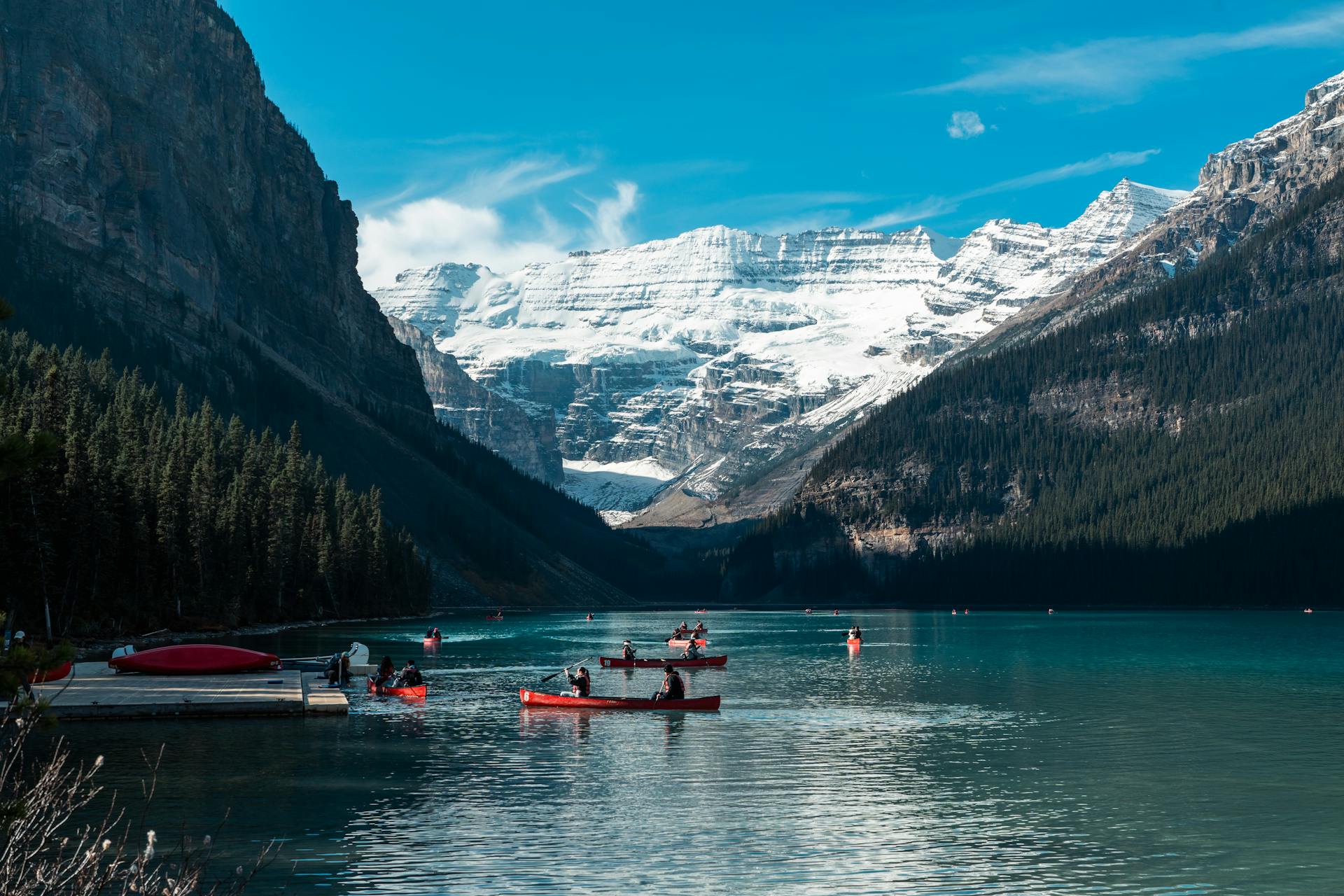
Lake Louise is glacier-fed by the Victoria Glacier, which gives the lake its iconic turquoise colour. Despite its calm appearance, the water remains icy year-round, rarely warming above single-digit temperatures.
Walk beyond the main viewpoint
📸 Photo spot: Follow the signed shore trail beyond the chateau’s main viewing area, then look back. As the hotel gets smaller, the angle across the water changes. You can find a different composition without making a long hike of it.
The full lakeshore route is 2.3 km one way, with about an hour for the round trip before photo stops. Turn back whenever you’ve had enough; this is an easy outing to shorten. With a wheelchair or walking aid, ask about the actual surface of the section you have in mind—the trail’s “easy” rating tells only part of the story.
Canoe on Lake Louise
If you’ve pictured yourself paddling towards Victoria Glacier, this is where to do it. From a canoe, the chateau recedes behind you and the water fills much more of the view. A waterproof pouch keeps your phone or camera protected between photographs; keep a layer handy for wind on the lake.
At the Fairmont boathouse, non-hotel guests pay CA$160 plus GST for half an hour or CA$180 plus GST for an hour. Hotel guests pay CA$100 and CA$110 respectively. At day-visitor rates, the hour is better value if you want to paddle: the shorter rental saves relatively little. Walking costs nothing, though, and still gives you that glacier view. Rentals are first-come, first-served and card-only; the boathouse’s canoe information has the operating details.
A canoe takes three adults, or two adults aged 16 and over with two small children under 25 kg each. Staff can confirm your family’s seating before you queue. Life jackets and instructions come before the paddle itself, and wind can close the dock.
Choose a hike that fits the visit
Mirror Lake is the earlier turnaround on the Lake Agnes climb, with the dark cliffs of Big Beehive rising above its small basin. It’s a proper uphill walk, even though you’re stopping short of the tea house. It suits a shorter hiking stop before Moraine.
Lake Agnes gives the climb a very appealing finish: tea beside a mountain lake. It’s 3.9 km each way, with about 495 m of climbing and a short 80 m dip along the way. Allow 2.5 to 3 hours of walking there and back. The tea stop and its queue come on top of that. Our Lake Agnes hike and tea-house advice covers what to pack and what lunch at the top is like.
Plain of Six Glaciers follows the lake towards the mountains you’ve been looking at from the chateau. Beyond the water, peaks and glaciers become the focus, with a seasonal tea house along the way. The 5.9 km one-way route has 595 m of elevation gain and takes about four hours return before stops. This is the walking-led Lake Louise day. You can link it with the Agnes route for a longer outing; on a two-lake visit, one tea-house hike is plenty.
Distances here are one way unless marked as a loop, and times cover the return walk before your stops. Elevation gain counts every uphill section, not just the height difference between start and finish. Conditions matter as much as the numbers, so check Parks Canada’s trail listings before you set out.
Enjoy the chateau from the lakeshore
You can enjoy Fairmont Chateau Lake Louise as part of the lakeside view whether you’re staying there or visiting for the day. For a meal inside, book one of the dining options open to day visitors. Access to lounges, indoor seating and hotel toilets follows the hotel’s guest policies, so use the public facilities for the rest of your visit.
A shore walk and lunch outdoors can be the whole afternoon. The chateau is part of the scenery, whether or not you’re paying to eat inside.
What Should You Do at Moraine Lake?
Start with the Rockpile for the full sweep of lake and Ten Peaks, then walk down to the shore for a closer look. Canoeing takes you out beneath those peaks; the hiking trails climb into the valleys above the lake.
Moraine Lake sits higher than Lake Louise, which is why its water often turns turquoise later in the season. The lake’s dramatic setting in the Valley of the Ten Peaks once appeared on Canada’s $20 bill—an honour earned by very few landscapes.
Take the signed Rockpile route
The Rockpile is the place for the elevated view across Moraine Lake. Its 0.7 km loop gains 35 m and takes about 30 minutes, plus photographs. Steps and uneven ground make it unsuitable for wheelchairs; the lakeside is the alternative to consider if stairs are awkward for your group.
Follow the signed path, keeping behind the barriers rather than climbing over the rocks. Good grip helps on damp steps. At the top, take your photographs, then put the camera away for a moment.
Walk along the shore
Along the shore, you’re looking up at the peaks rather than down across the whole lake. The walk is 1.3 km one way and about 45 minutes return, with the option to turn back sooner.
For a group splitting between the shore and the Rockpile, agree on a meeting spot first: phones are out of service here. Anyone avoiding the steps should ask about the shore path’s current surface, too.
Canoeing beneath the Ten Peaks
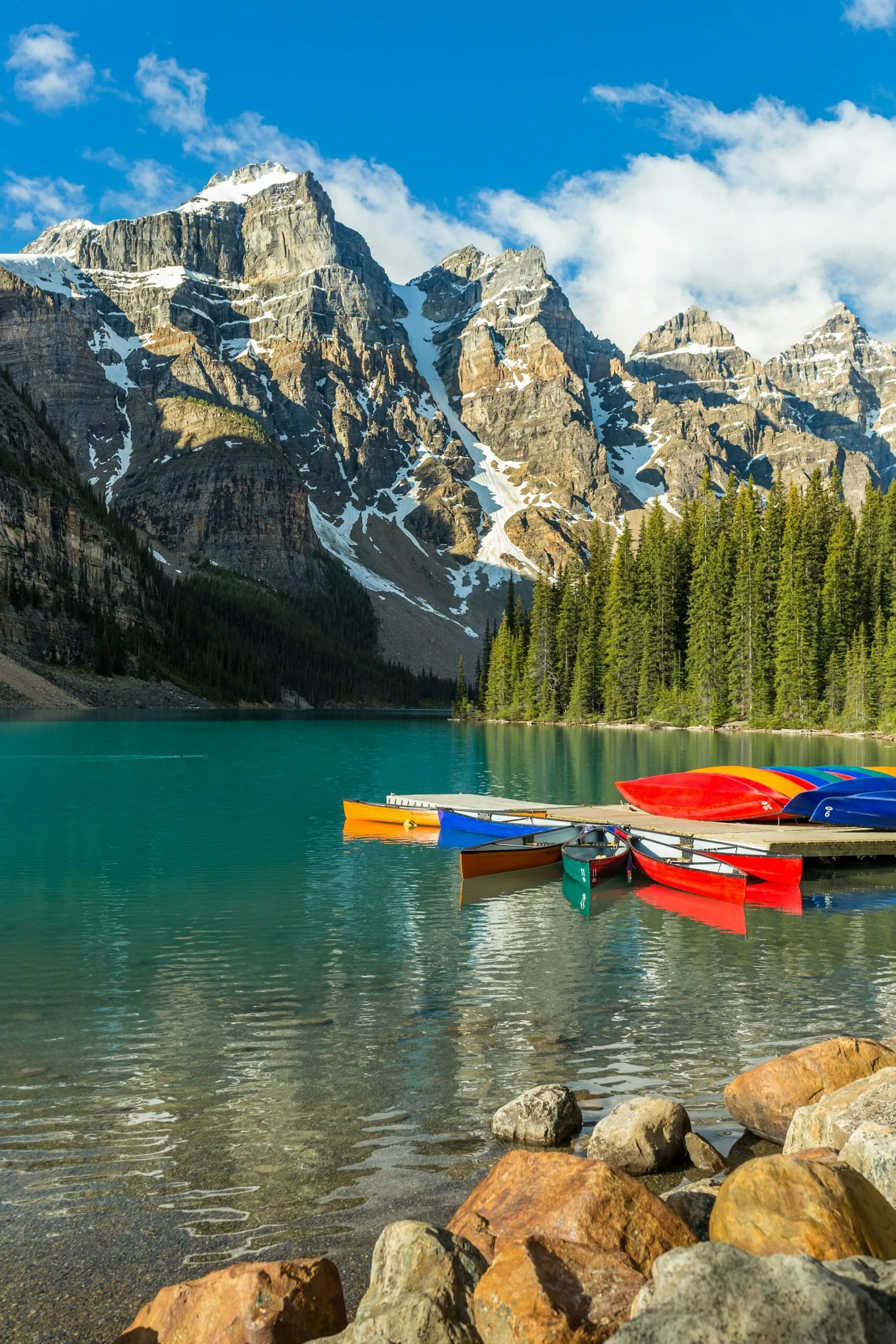
⚠️ Canoeing at Moraine: Moraine’s on-site rental canoes are the paddling option. Personal canoes, kayaks and paddleboards are prohibited under the current Water Preservation Zone rules—even if a shuttle operator offers to carry an inflatable. The water-activity restrictions explain what applies at each lake.
To see the peaks from the water, rent a canoe from Moraine Lake Lodge. Pricing & details: CA$170 plus tax per boat for one hour, daily from 7:30 a.m. to 6:30 p.m. during the mid-June to mid-September dock season, depending on water conditions. Paddles, life jackets and basic instruction are included, with room for two or three people in a boat.
Rentals are first-come, first-served, and the dock can close in bad weather. Pets have to stay out of the canoes. If paddling matters to your trip, check the lodge’s day-visitor information, particularly towards the end of the season. Canoe operations finish earlier than the October shuttle service.
Consolation Lakes, Larch Valley, Sentinel Pass or Eiffel Lake?
Consolation Lakes is the gentler hiking choice beyond the shore: 2.9 km one way, 135 m of elevation gain and around two hours return. The first lake brings views towards the Quadra Glacier. It’s a good fit for a Moraine stop that includes a trail as well as the Rockpile.
For autumn colour, Larch Valley and Minnestimma Lakes earn the longer climb. The trail rises into larch forest above Moraine, with the Ten Peaks beyond. It’s 4.5 km one way with 570 m of elevation gain, so plan on 3.5 to 4 hours there and back. That’s enough walking to make this the main event, with a shorter Lake Louise visit afterwards.
Above Larch Valley, the switchbacks to Sentinel Pass lead into steeper, more exposed ground between Larch and Paradise valleys. The full route from Moraine is 5.6 km one way with 750 m of elevation gain and 4.5–5.5 hours of return walking. The pass is an extension for hikers comfortable with the terrain; stopping in Larch Valley still gives you the trees and mountain views.
Eiffel Lake shares the beginning of the Larch Valley route, then branches along the valley side towards views over the lake and the Ten Peaks. Allow 4–5 hours return for its 5.7 km one-way route and 560 m of elevation gain. Pick this or Larch Valley for a two-lake day, rather than trying to fit both.
Before heading up, check trail closures and any bear-related group requirements. Bring suitable hiking gear and bear spray you know how to use. Follow the posted instructions at the trailhead, and choose a turnaround time that leaves you comfortably back for your bus.
⚠️ Group access rules: Parks Canada has required tight groups of four or more on these trails since 1999, when it introduced Group Access here after a run of bear encounters—the minimum was six hikers until 2007. “Tight” means the person at the front can comfortably talk to the person at the back. It’s not always active, so check current bulletins before you go; non-compliance in an active zone carries a real fine.
When Should You Visit the Two Lakes?
June through early October is the season for a combined shuttle visit. In 2026, Parks Canada’s Moraine service runs June 1–October 12, weather permitting, and Lake Louise service starts May 15. Within that window, the best month depends on whether you’re coming for paddling, high trails or autumn colour.
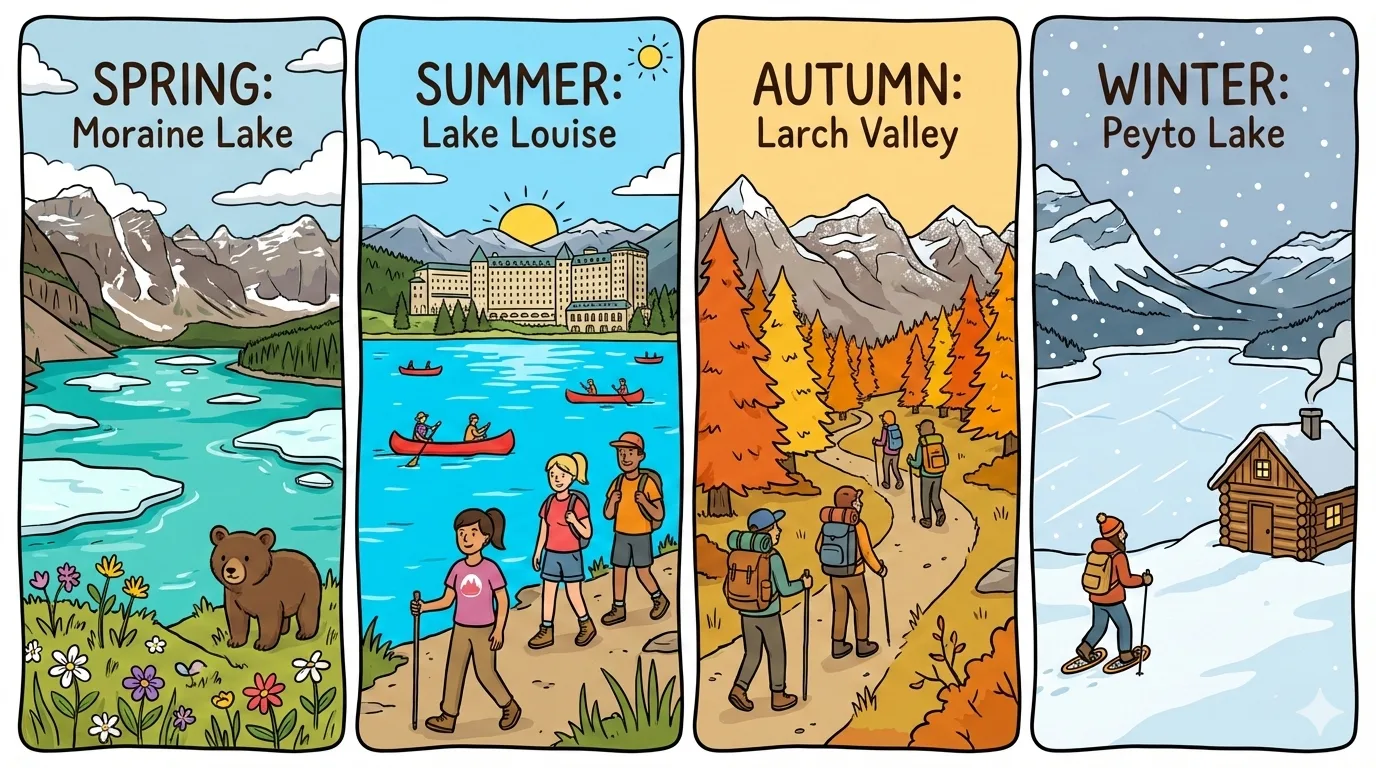
Early summer: lakeshore walks and changing trail conditions
June suits a day beside the lakes. Higher trails can still hold snow or have avalanche concerns, so a hiking trip needs a closer look at current conditions. The shores are the simpler starting point for an early-summer visit.
The colour changes with light and seasonal conditions, too. The lake in front of you may look quite different from the photograph that first made you want to come.
July and August: give yourself time at the lakes
July and August bring long evenings and busy viewpoints. An early shuttle gives you more of the day, rather than a promise of an empty canoe dock. Book transport ahead, then enjoy the extra daylight beside the water while keeping your last bus in mind.
Summer packing still needs a jacket. It’s much nicer eating lunch through a passing shower when you’ve got something dry to pull on.
September and early October: make time for the larches
📝 2026 larch planning window: Aim for the last two weeks of September. That’s the usual peak-colour window in Banff & Lake Louise Tourism’s fall advice, rather than a forecast of this year’s exact peak. Weather can shift the timing; some colour can last into early October, but late September is the better bet for a trip built around the golden trees.
In Larch Valley, the colour is part of the walk, with golden trees around you and the Ten Peaks beyond. Give that hike the biggest share of the day. A September weekday can still be busy during the peak, and recent colour and trail reports will help you decide when to go. If your trip lands in October rather than late September, October at both lakes is a different trip — the larches thin out, the shuttle stops on the twelfth, and the road closes behind it.
Autumn also brings shorter days and a greater chance of snow. Pack a warm layer for stops and turn around early enough for a comfortable descent. The café and canoe dock keep their own seasons, so the shuttle’s final date tells you only when the bus stops running.
Winter: visit Lake Louise as a different outing
Come to Lake Louise for the snowy lakeshore in winter, and save the combined trip for the shuttle season. Moraine’s approach beyond the maintained winter route crosses avalanche terrain, making the full journey unsuitable for a casual walk to the lake.
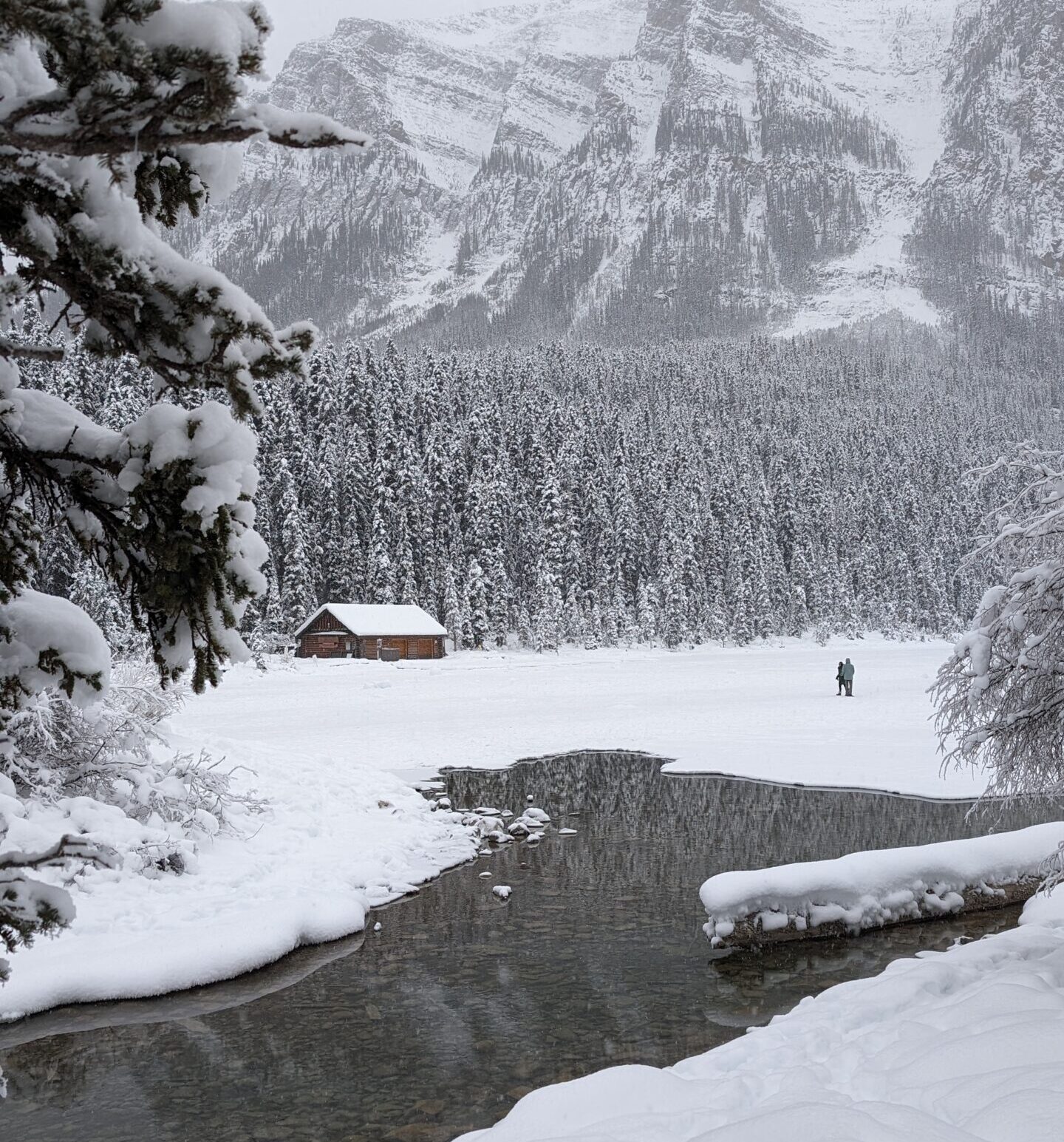
At Lake Louise, choose designated winter walks or skating when current conditions and local guidance allow it. Follow those recommendations: footprints and apparently frozen water can be misleading. The summer tea-house trails also cross avalanche terrain. Parks Canada’s Lake Louise avalanche guidance helps you choose where to go before you venture beyond the designated winter options.
Where Do You Park, and What Does the Visit Cost?
Park at the ski-resort Park & Ride for the regular Parks Canada two-lake shuttle. That parking is included with your reservation, which saves the separate Lake Louise lakeshore parking charge. The rest of the budget covers transport, park admission where applicable, food and your chosen activities.
Park & Ride versus Lake Louise lakeshore parking
The Park & Ride on your booking has an access gate open from 6 a.m. to 8 p.m. After that, cars stay in the lot until it opens again. It’s worth knowing this when you choose the bus home: even an alternative ride back after closing would leave your car behind the gate.
At Lake Louise lakeshore, parking costs CA$42 per day during the 2026 paid season, May 15–October 12. Payment applies from 3 a.m. to 7 p.m., at a flat day rate, and spaces are first-come, first-served. If you’re taking Alpine Start and parking here, pay before boarding.
💡 Free outside paid hours: that CA$42 charge only runs 3 a.m.–7 p.m., so lakeshore parking is free before or after that window. That’s a separate clock from the shuttles, though: the Lake Connector’s last ride is 6 p.m., and the final Park & Ride bus back to the ski resort leaves at 7:30 p.m. Don’t assume parking is free just because the ride you needed has already stopped running.
For daytime lakeshore parking, check traffic information and have another plan ready if the lot is full, even when you’re arriving early. A reserved shuttle makes the morning easier to plan around.
⚠️ If the lot is full: Lake Louise lakeshore parking has no waiting area. A full lot means driving on to the Park & Ride or another plan, not circling and hoping for a space. Parks Canada’s BanffNow tool shows real-time parking and traffic conditions if you want a check before you commit to the drive.
Admission and transport are different charges
The adult Parks Canada shuttle fare is currently CA$12.75, plus one CA$3.50 online reservation fee per booking. Park admission is separate from that two-lake ticket. The Banff fees page has the other age categories, parking and admission prices.
Regular park admission resumed September 8, 2026 after the summer Canada Strong Pass period. Daily admission is CA$12.25 per adult or CA$24.50 for a family/group of up to seven arriving in one vehicle. Visitors aged 17 and under have free admission, though they still pay for the shuttle. If you’ve already got a Discovery Pass, that covers eligible admission; shuttles and lakeshore parking are separate charges.
You can buy admission through Parks Canada’s official channels, at an entrance station or at a visitor centre. Follow the display instructions that come with the pass. If your hotel or rental company includes admission, ask how you’ll receive the pass itself and what to display.
How Does the Visit Work With Limited Mobility?
Parks Canada’s accessible shuttles can get you to both lakes. From there, choose the views and walks that suit your group. A shorter lakeshore visit leaves time to sit, take photographs and move at a comfortable pace.
Book a regular shuttle ticket, then tell the Park & Ride staff you’ll need an accessible vehicle when you arrive. They’ll dispatch one as needed, and companions can join subject to space. For 2026, accessible service is available on the regular shuttles rather than Alpine Start. The accessible-parking-placard exception for driving to Moraine has ended, so this is the transport arrangement to make.
Lake Louise still has accessible lakeshore parking for valid placard holders, on a first-come basis. If you’re planning to park there and continue to Moraine, ask Parks Canada about the whole journey before setting off. Connector access needs its own eligible ticket, separate from the parking permit.
At Moraine, the lakeside offers views for those who’d rather avoid the Rockpile steps. At Lake Louise, you can choose a short stretch of shore instead of walking the full path. Ask about the current surfaces, toilet access and distances from the stop to your chosen viewpoints. Those details are more useful than an “easy” trail label when you’re deciding what will work.
Allow extra time for vehicle dispatch and transfers. The Parks Canada shuttle FAQ explains the accessible service, including what to expect when you arrive.
Where Can You Eat, Find Toilets and Refill Water?
Lake Louise has hotel dining, Moraine has a seasonal café, and a packed lunch works at either. Bring your drinking water, especially for hiking.
Food at each lake
For a meal at Fairmont Chateau Lake Louise, choose a restaurant and sitting that welcomes day visitors. Lakeview Lounge currently takes lunch reservations for destination visitors; its day-visitor dining information is the place to check. Other venues and meals have their own arrangements, so a reservation saves you arriving hungry and looking for a table.
For lunch in your backpack, buy supplies in the village or near your accommodation before leaving. Trailhead Café in Samson Mall is a handy stop for breakfast, lunch or coffee; there’s also a small grocery store in the village. This is a separate stop from the lakeshore, so picking up food on the way saves a trip back down from the lake.
At Moraine, the lodge’s Snowshoe Café serves drinks and baked goods to day visitors, with outdoor seating. It’s a welcome place for a coffee if it’s open when you’re there. Carry lunch as well, since the café is seasonal and the selection is limited. Keep food packed away from wildlife, and use the appropriate bins for your rubbish.
Toilets, water and connectivity
Use the toilets at the Park & Ride before boarding, and the public facilities at Lake Louise during your visit. Moraine has pit toilets and no public running-water supply. Fill your bottles beforehand and carry enough for your walk and the time between buses; a café drink is an extra rather than your water plan.
💡 Save it before you go: Moraine has no cell service or public Wi-Fi. Download tickets, maps and return details before you arrive, and agree on a meeting place if your group splits up. You may get a signal at Lake Louise, but an offline copy works at either stop.
There’s a free community phone in front of Moraine Lake Lodge, with an after-hours transport-provider list nearby. If you miss the last bus, that’s where you can start arranging another ride. That return is at your own expense, and the Park & Ride gate hours still apply.
Where Should You Stay for This Visit?
Lake Louise makes the early start easier. Banff is a better all-round base for a wider trip, with Roam access on your lakes day and more to do in town afterwards. Canmore can work well for a longer stay, at the cost of an extra journey each way. Compare the trip from your actual room to the pickup, not just the town name.
Within Lake Louise, the village hotels, Fairmont Chateau and Moraine Lake Lodge give you very different mornings. From a village hotel, there’s still a journey to the lakes or the shuttle. At the Fairmont, you’re already beside Lake Louise, with Moraine transport still to arrange. Registered Moraine Lake Lodge guests have their own road-access arrangements, sent directly by the lodge.
If you’re weighing those choices, our comparison of places to stay near the lakes looks at the bases and individual properties. Ask your hotel about any shuttle it offers, including whether it goes to the Park & Ride or directly to a lake. For a break back at the room between visits, check the return and next departure arrangements.
Calgary makes sense for an airport night. For this outing, it adds a substantial drive before and after the lakes—an unappealing finish for whoever has to drive after a long hike.
Heading north afterwards? The Icefields Parkway drive towards Jasper deserves its own day, or a separately planned onward leg. You’ll want to be stopping along that road, too.
What Planning Mistakes Are Worth Avoiding?
Sorting the pickup, ticket and main activity the night before takes most of the guesswork out of the morning. The details below are the ones worth a final look before you put the phone away.
- Saving only “Lake Louise” in your map app. Save the actual pickup from your booking. Keep it ready for the morning.
- Planning two lakes around a single-lake ticket. Look at which transfers your booking includes and where it brings you back, especially with a commercial service.
- Counting only the time on the trail or water. Leave room for the walk to the stop, queues, a meal and the rental process. Those are part of the day too.
- Keeping every activity after a delay. Choose an extra you can drop. A shorter shore walk leaves you more flexibility than an uphill hike once you’ve started it.
- Using an old trip report as a timetable. Traveller accounts are useful for choosing a pace and hearing what people enjoyed. Use current transport and access information for the booking itself.
Frequently Asked Questions
Which lake should you choose if you only have time for one?
Lake Louise is the pick for a year-round visit, a longer lakeshore walk or a tea-house hiking day. Moraine is the seasonal choice for the Ten Peaks and Rockpile view. If you can only get transport to one on your date, take the opportunity and spend the day there.
Can you visit both lakes with a stroller?
Yes, Parks Canada shuttles can carry a stroller. A day around the shores with plenty of breaks is the easier version to plan: the Rockpile has steps, and gravel or uneven paths may be awkward for some strollers. If naps and bus queues would make the combined day tiring, two separate lake visits give your family more room to settle in.
Can you bring a dog?
Yes, if your dog fits in a small carrier you can hold on your lap throughout the Parks Canada shuttle ride. Service animals have separate arrangements. Check with your operator before booking, especially if you’ve got a larger dog, and look at any restrictions on the trails you want to walk. Pets aren’t allowed in Moraine’s rental canoes.
What if you miss the last bus from Moraine Lake?
You’ll need to arrange and pay for another ride. The community phone and posted transport contacts are the place to start. Stay at the lake while arranging transport rather than heading down the road on foot; it’s a long walk with unreliable phone reception. If your car is at the ski-resort Park & Ride, check the gate hours as well. Another operator may have space, but you’ll need to confirm a place with them.
Official Sources and Useful Contacts
Use these for bookings, trail conditions and any last-minute changes before you set out.
- Parks Canada reservations — shuttle availability and bookings; phone 1-877-737-3783.
- Banff trail conditions — current conditions and restrictions for your walk.
- Banff alerts and bulletins — closures and current notices.
- Parks Canada contacts — Lake Louise Visitor Centre: 403-522-3833; Banff Dispatch, non-emergency: 403-762-1470, available 24 hours.
For an emergency, call 911 where a connection is available. Mobile coverage at Moraine Lake and on the surrounding trails is unreliable, so keep your return plans and important information saved before you set out.


Leave a Reply