
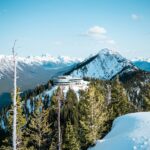

The Lake Agnes Tea House hike is worth doing if you’re comfortable with a steady uphill walk. The trail leaves Lake Louise and climbs through the trees, mostly on switchbacks. You gain about 495 metres, with a short 80-metre dip along the way. Most people take about an hour and a half to reach the two-storey log building beside the green lake. The walk down is a little quicker. At the top, you can sit on the wooden porch with a pot of loose-leaf tea and look back down the valley. The photos make the walk up look easier than it is.
Quick facts
- Distance: 3.9 km each way
- Climb: 495 m of gain and 80 m of descent — steady, no scrambling
- Time: 2.5–4 hours return, plus however long you sit
- Tea house hours: advertised as 8 a.m. – 4 p.m., seven days in season
- Season: usually early June to the first week of October
- Bring: cash, water, layers, bear spray
As of September 2026
The trail starts at the far right of the Lake Louise shoreline, beyond the Fairmont, and goes straight into the trees. You begin climbing within a couple of minutes, with very little level ground before the tea house.
Starting early makes the day easier, especially if you’re staying nearby. Our comparison of places near Lake Louise and Moraine Lake shows how early you’ll need to get up and how far you’ll have to drive from each base.
People have been hiking up here for tea for well over a century. The tea house was built in 1901 as a shelter for hikers and has served tea since 1905. The original log building was replaced in 1981, but the windows, tables and chairs inside are the originals. It’s still a family business, run by Cynthia Magee with her daughter Joanna, son-in-law Pierre Luc and her three grandchildren. There are more than 100 teas to choose from, and the baking is done fresh every morning.
How Hard Is the Lake Agnes Tea House Hike?
It’s a moderate hike, though steeper than the words “tea house hike” suggest. You gain about 495 metres over 3.9 kilometres, with a short 80-metre dip along the way. The path is wide and well built, with no scrambling, exposure or route-finding. The route is easy to follow, but the climb stays steady from the start. If you walk regularly, you’ll often reach the top in 60 to 90 minutes. If you don’t, allow two hours and settle into a slower pace. Take it easy at the start so you still have energy after Mirror Lake.
The climb has two parts. The first is a long set of switchbacks through the forest, with occasional openings where you can see Lake Louise farther below. Each opening shows how much height you’ve already gained. Mirror Lake comes at the end of this part. It’s a small, dark pool beneath the Big Beehive, and nearly everyone pauses there whether they need the rest or not.
The second part is shorter. The path passes a waterfall and then reaches a wooden staircase that climbs to the tea house porch. Keep a little energy for those final steps.
If you’ve just flown in, the altitude can make the climb feel harder. The tea house sits at roughly 2,135 metres, so people who were at sea level a day or two earlier often feel more breathless than expected. Slow down and give your body time to adjust. The lower switchbacks can feel busy, but you don’t need to match anyone else’s pace. Let faster hikers pass and keep a rhythm you can manage.

What Should You Bring?
Bring your own water, warm layers whatever the forecast says, and bear spray. This is still a mountain hike, even with a café at the top.
Water. Carry enough for the full return walk. Supplies at the tea house are hiked up by staff or flown in by helicopter. Supplies are limited, and a busy afternoon can empty the shelves. A litre each is sensible, with more on a hot day. There’s nothing drinkable along the trail, so don’t rely on buying a drink at the top for the walk back.
Layers. The weather at Lake Louise won’t always tell you how the porch will feel. Up at the tea house, the porch can be colder and windier than the lakeshore, and a bright September morning can turn to sleet quickly. Pack a warm mid-layer and something windproof. You may carry both all the way up, but you’ll be glad to have them once you stop moving.
Footwear. Trainers work in dry conditions. After rain, the upper switchbacks become slick and rooty. Good grip matters most on the descent, when tired legs make every wet root more awkward. Wear shoes that will feel secure on the way down.
Sun. Parts of the upper trail are exposed, and cool air disguises how much sun you’re getting. Bring sunscreen and a hat, even if it’s cloudy at the trailhead. Conditions can change before you reach the open upper slope.
Bear spray. The Lake Louise trail system is grizzly and black bear country, with closures and warnings in most summers. Keep the spray easy to reach, not buried under your lunch and spare clothes. Make noise on blind corners and walk with others when you can. Bears still use this busy area, especially early and late in the day.
Cash. It’s the easiest way to pay at the tea house, in Canadian or US dollars. Cards work too, with a fee.
A bag for garbage. Whatever you bring up, you carry back down the trail.
Before setting out, decide what would make you turn around. Weather moving in, someone in your group having trouble or a schedule that could leave you walking down in the dark are all good reasons to stop at Mirror Lake. It’s easier to make that decision before anyone is tired. Mirror Lake is still a worthwhile finish, and you can return next summer for the tea house.
Is the Tea House Worth the Climb?
Yes, especially for the setting. After an hour and a half in the trees, you reach a wooden porch above jade-green water, with the Beehive rising behind it and a busy little dining room inside. There’s no road up here and no electricity, and everything is made by hand. Supplies are hiked up by staff or flown in by helicopter.
The loose-leaf tea is good and comes in proper pots. The food is simple mountain-café fare, and it’s welcome after the climb. The menu may feel limited if you’re expecting an ordinary restaurant.
If a 495-metre climb for tea doesn’t appeal, this probably isn’t the right hike. You may also prefer another outing if you’ve just arrived from sea level, feel uneasy in bear country or are visiting when the tea house is closed. The trail still leads to the lake when the building is shut. It simply feels more like a hike than a tea house visit.
Early in the morning, the porch may be half empty while mist lifts off the water. Even though the tea house draws thousands of hikers every summer, it can be quiet at that time of day. By midday, the queue may run down the steps, tables turn quickly and the wooden staircase becomes a waiting area.
Hikers who’ve made the climb tell us about a rainbow over the lake after a wet climb. One visitor said the tea house felt like a mountain hut somewhere in the Alps.
If you’ve got most of a morning or afternoon and feel comfortable with the climb, this is a lovely way to spend it at Lake Louise.
When Is the Lake Agnes Tea House Open?
The tea house currently advertises hours of 8 a.m. to 4 p.m., seven days a week, during a season that usually runs from early June to the first week of October. Its detailed schedule has not yet been clearly labelled for 2026, so confirm the dates directly before planning a meal around them. There’s no separate last-seating time or later takeaway closing.
Snow conditions affect the exact opening and closing dates. Those dates are often confirmed only shortly beforehand. If you’re travelling in early June or the first days of October, check before planning lunch at the top. Pack a fallback snack even when the building is expected to open, in case it’s closed when you arrive.
The trail itself remains accessible outside the tea house season, but winter and spring are a different proposition. Parks Canada identifies the Lake Agnes and Mirror Lake trails as avalanche terrain that is not safe without avalanche training and equipment. Do not treat the route as a casual snowshoe walk; choose a designated winter trail unless you have the skills, current conditions and gear for avalanche terrain.
What Does It Cost — and Do You Need Cash?
Cash is the easiest way to pay, in Canadian or US dollars, and cards work too for a fee. A pot of tea costs around $16 and pours three or four cups; sandwiches are about $12, soup about $9, and sweets range from $6 to $12. Two people sharing tea and food should plan on roughly $30 to $40.
There’s no cash machine at 2,135 metres, so get cash in Lake Louise village before starting the hike. Once you reach the porch, there is nowhere to withdraw more.
Prices tend to rise with each season. Treat these figures as a rough estimate rather than the current menu, and carry enough for a little more than you expect to order.
When Should You Start Walking?
Starting before 8 a.m. often puts you ahead of the midday crowd, but it never guarantees an empty porch. The tea house has only a few dozen seats, and the queue can reach down the steps in July and August. If you start later, build waiting time into the day rather than counting on a quick table.
Starting early also helps with access. Lake Louise parking is limited, costs $42 a day and fills early in summer. For most people, the Parks Canada shuttle is simpler; the shuttle booking details are worth sorting before the trip. If you’re driving in August, the car park may already be full by 10 a.m.
Late afternoon is the other useful window. Many day-trippers have left and the light begins to soften across the lake. The porch can be calmer, but keep an eye on the time. The kitchen stops at four, and you’ll still need enough daylight for the descent.
Weekends are busier than weekdays, and July and August are busier than the shoulder months. If your dates are flexible, a Tuesday in mid-September usually means fewer people, with larches beginning to turn as well. It may still be busy, but you’ll have a better chance of finding a seat.
The descent is faster, but it often takes longer than people expect. A steep path is hard on tired knees, and most people need 45 minutes to an hour. Allow that time instead of expecting to reach the shoreline twenty minutes after leaving the porch.
What’s Above the Tea House?
Two short extensions begin above the tea house. If your legs still feel good, both are worth doing. The Little Beehive is the gentler choice: about 45 minutes up the ridge to a broad Bow Valley view. It adds height without committing you to the harder climb behind Lake Agnes. Choose it when you’re tired but not ready to head down.
The Big Beehive is harder. Allow an hour up from the tea house, following switchbacks behind the lake to a wooden shelter looking straight down on Lake Louise. It turns the day into a five-hour outing. If the climb to the tea house felt like enough, choose the Little Beehive or head back down.
The Plain of Six Glaciers is a separate, much longer hike from the same lakeshore, not an extension of this trail, although the two are often confused.
If a lake-to-lake day sounds better than another climb, compare the options for travelling between Lake Louise and Moraine Lake.
Frequently Asked Questions
Do you need bear spray for the Lake Agnes hike?
Yes. The Lake Louise trails cross grizzly and black bear country, and warnings or closures appear in most summers. Keep spray accessible, make noise on blind corners and walk with others where possible. You’ll rarely be alone on this busy route, but you still need to be prepared.
Is there water at the Lake Agnes Tea House?
Don’t plan on buying water there. Bring your own. Supplies are hiked up by staff or flown in by helicopter, and busy afternoons can run short. Bring a litre each for the return trip, with more in hot weather. There’s no drinkable water along the trail.
How high is the Lake Agnes Tea House?
Roughly 2,135 metres, about 400 metres higher than Lake Louise. The trail itself climbs 495 metres, with an 80-metre dip along the way. If you left sea level only a day or two ago, expect the climb to feel harder than your fitness suggests. The altitude is likely the reason, so slow down and give yourself more time.
What happens if the weather turns while you’re hiking?
Turn around if the weather changes. Wet switchbacks become slippery, and conditions can worsen quickly. Mirror Lake is a sensible place to finish and still gives you a worthwhile walk. You can return next summer for the tea house.
How long does the Lake Agnes Tea House hike take?
Allow two and a half to four hours for the return walk, then add time for tea and any queue. Your pace on the climb makes a difference. Add another hour or two if you’re continuing to one of the Beehives.
Can you do the Lake Agnes hike with children?
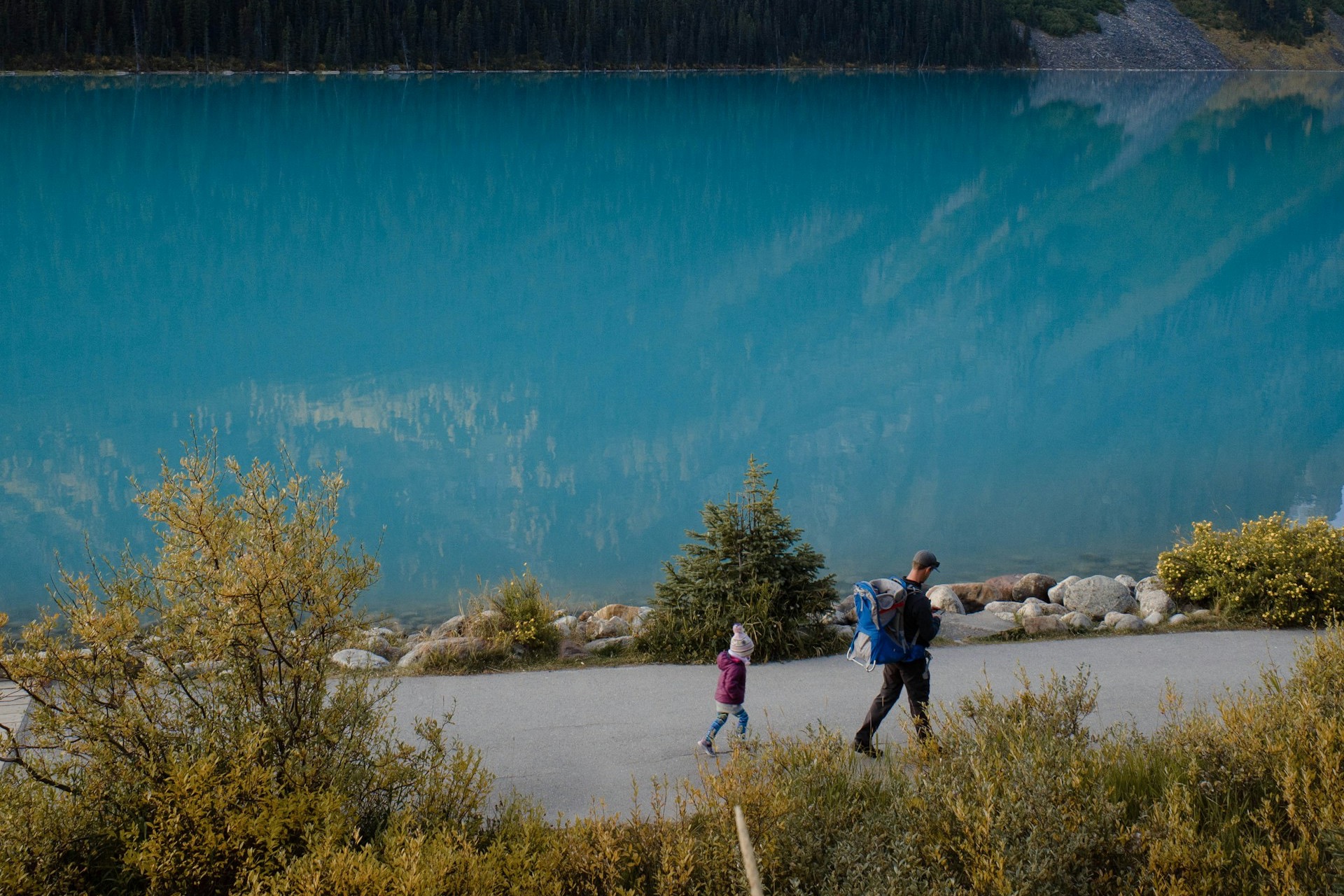
Many families do, though it’s a real climb and younger children often ride in a carrier for part of it. Taking Lake Agnes with kids goes best when you’ve decided who carries and where you’ll turn back before you start.
Is the tea house open in winter?
No. The building usually closes in the first week of October and remains shut through winter. The trail crosses avalanche terrain in winter and spring, so it is not a casual snowshoe route. Without avalanche training, current conditions and appropriate equipment, choose a designated winter trail instead.
One Last Thought Before You Go
Start early and take the switchbacks at a pace you can hold. Once you reach the porch, take your time with the tea and rest your legs before walking back down. If you’re still working out where this fits in the trip, the full 3-day plan has it slotted alongside the rest of your Lake Louise day.


Leave a Reply