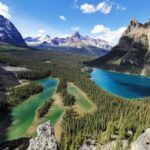
Banff in winter brings deep mountain snow, three ski resorts and a town that stays lively right through the cold months. You can spend the day skiing beneath the Rockies, then come back to town for a hot meal or an evening soak while steam rises off the hot springs.
Skiing is a big reason to come, but it’s far from the only one. In town alone you can walk to Bow Falls, snowshoe through old-growth spruce, skate on an outdoor rink and spend a stormy afternoon in a museum. Beyond it, you can walk out across frozen Lake Louise or take a sleigh ride through the Bow Valley.
Once you’ve picked your favourites, our three-day Banff itinerary helps you put them in order.
Quick facts
- Ski season: Early November into spring
- Coldest stretch: December to February, with average highs around −3 °C in town
- Winter festival: SnowDays, January 21 to February 7, 2027
- Christmas Market: November 19 to December 13, 2026, at the Banff Train Station
- No car needed for: the town, the gondola, the hot springs, Lake Louise and the ski hills
As of October 2026
Is Banff Worth Visiting in Winter?
Yes. Banff feels like a different place in winter, and in several ways it’s an easier one to explore. From May through October, a trip to Lake Louise can mean traffic control, full parking lots and long waits. In winter the lake freezes beneath the peaks, the summer crowds thin out and paid parking at the lakeshore pauses until the shuttle season comes back.
Sunshine Village, Lake Louise and Mount Norquay are all within reach of town, so skiing is an obvious draw. But you don’t need to ski to fill a week. Skiers can catch a morning ski shuttle to the slopes while everyone else explores town, follows a winter trail or heads to Lake Louise. The whole group can meet up again at the hot springs or over dinner.
The cold and the shorter days are the main things to plan around, and once you’re dressed for it and starting early, winter opens up quickly. The one famous summer sight you give up is Moraine Lake, whose road becomes a ski trail for the season. For a classic frozen lake, put Lake Louise first.
Things to Do in Banff in Winter
These are the winter experiences I’d build a Banff trip around. Start in town, where most of them are a short walk or bus ride away, and save a clear day for Lake Louise. Most of them work without a car.
In Banff Town
Plenty of good winter days never leave the townsite. Everything in this group is a walk, a short bus ride or a few minutes’ drive from Banff Avenue.
Wander Banff Avenue and Bear Street
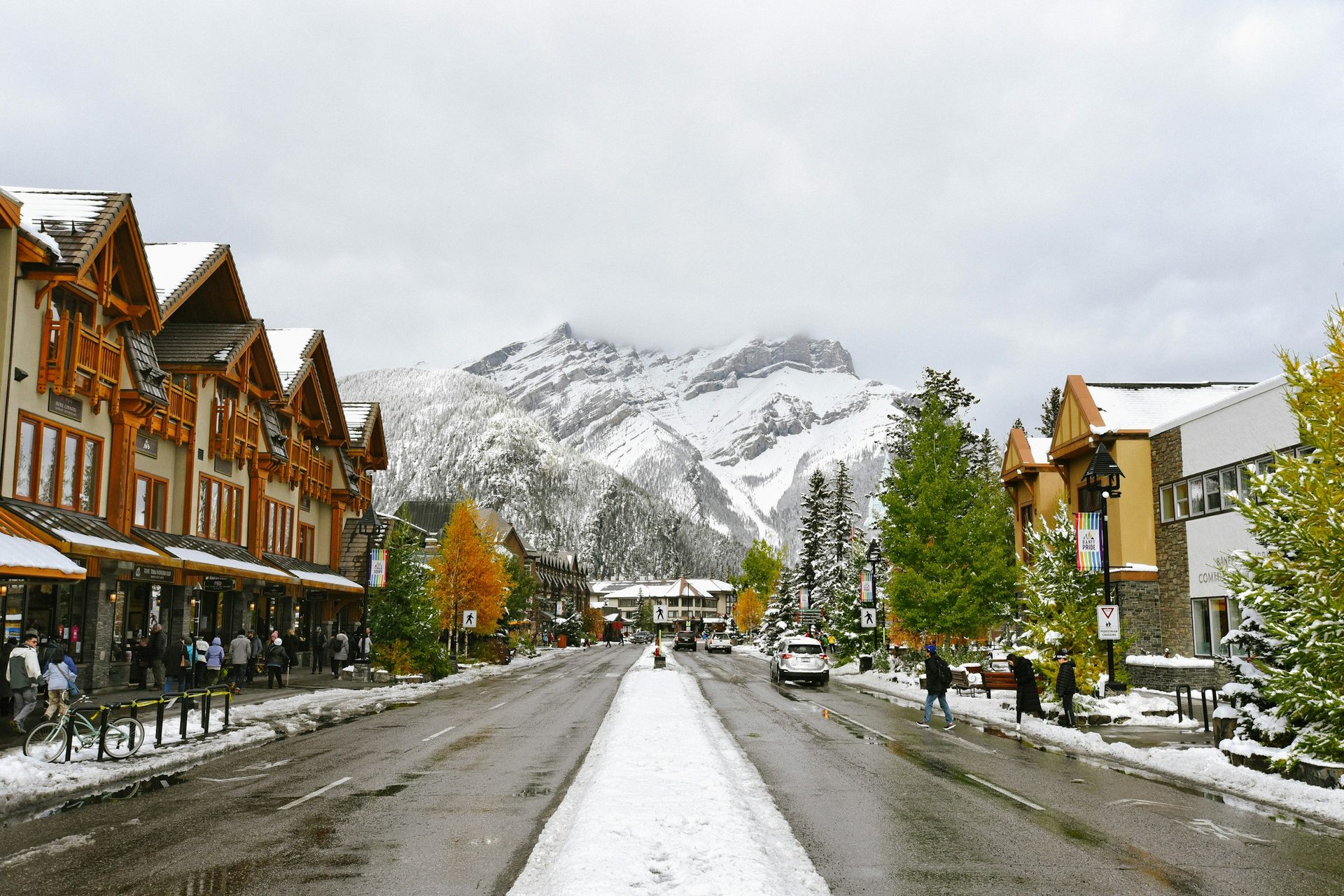
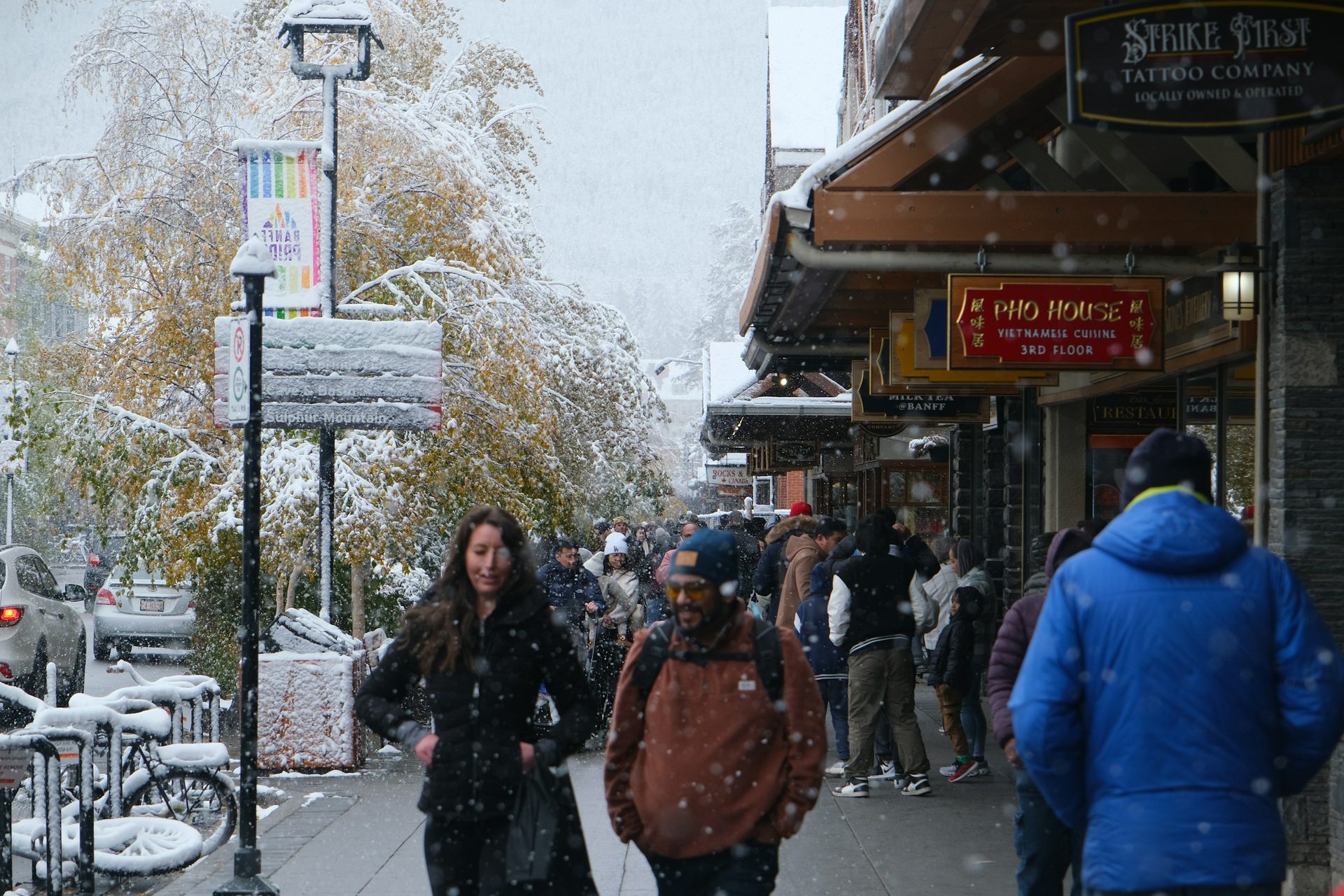
Banff Avenue is at its best on a snowy afternoon, with Cascade Mountain filling the end of the street. Give yourself an hour to drift between the outdoor shops and cafés without a plan. If you forgot your ice cleats, the Banff Visitor Centre at 224 Banff Avenue sells them.
One block west, Bear Street is the town’s pedestrian-first shopping street and the cosier of the two. Its galleries run from the Carter-Ryan Gallery at the north end to Canada House Gallery at the south, with the Whyte Museum along the way. Bear Street also has an outdoor fire pit, which makes a good place to stand with a hot drink between shops.
Warm Up With Coffee, a Pint or Fondue
Banff’s cafés earn their keep in winter. Whitebark Café at 401 Banff Avenue is the coffee stop for an early start, and Wild Flour Bakery on Bear Street adds pastries, soups and sandwiches. From November 12, 2026 to February 7, 2027, the Hot Chocolate Trail turns the warm-up into a game, with festive hot chocolates at cafés and restaurants across Banff and Lake Louise. The stops change every season, so check the Hot Chocolate Trail page for this year’s list.
Evenings start early in a Banff winter, and the town is good at them. Park Distillery on Banff Avenue is the only distillery in the national park, and its kitchen leans on campfire-inspired cooking. St. James’s Gate is a traditional Irish pub, and the Rose & Crown is known for its mountain views. On a properly cold night, The Grizzly House at 207 Banff Avenue serves fondue and hot-rock dinners, and High Rollers has bowling when the weather keeps you indoors. For our sit-down dinner picks, from Block Kitchen + Bar to The Bison, see where to eat in our three-day itinerary.
See Bow Falls and Surprise Corner
Bow Falls is broad and powerful rather than tall, and the short riverside stop is enough for most visits. For a longer walk, the Spray Connector starts at the Bow Falls day-use area, crosses the bridge and runs 2 kilometres one way to link the Spray River trails. Surprise Corner is a short drive away and looks back toward the Fairmont Banff Springs above the Bow River.
Climb Tunnel Mountain or Snowshoe Fenland Trail
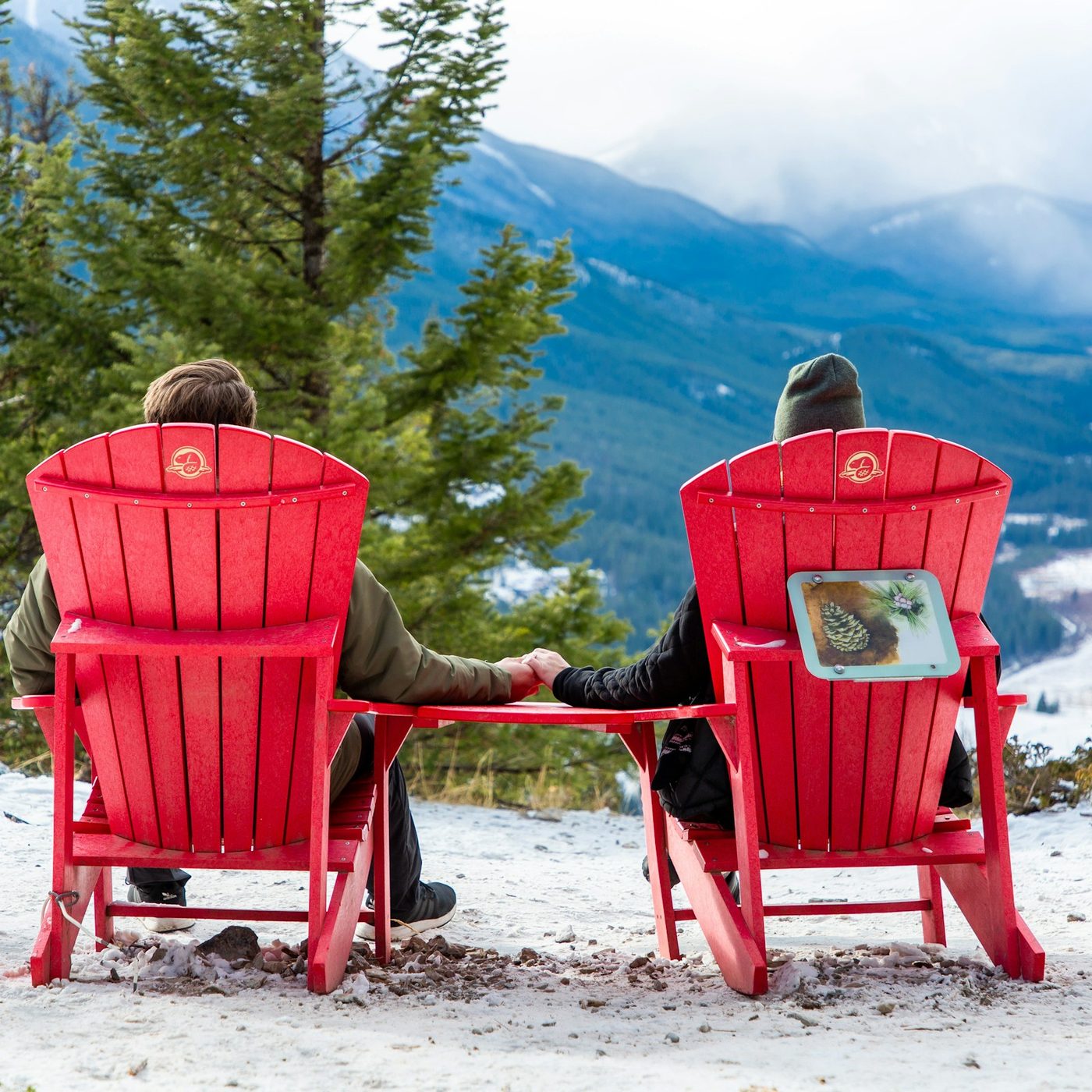
You don’t have to leave town to find a quiet winter trail. Snowshoeing is at its best from late December through early April, especially after fresh snow. Fenland Trail is the easiest place to start, a flat 2.1-kilometre loop under old-growth spruce whose trailhead is about a twenty-minute walk from downtown.
For more of a climb, Tunnel Mountain gains 260 metres over 2.4 kilometres and finishes on a summit right above town. The trailhead is a 15-minute walk from downtown, at the lower parking lot on St. Julien Road. The views repay the steady uphill, and the trail can be extremely icy, so wear cleats rather than trusting your boots.
Pair the Banff Gondola With the Upper Hot Springs
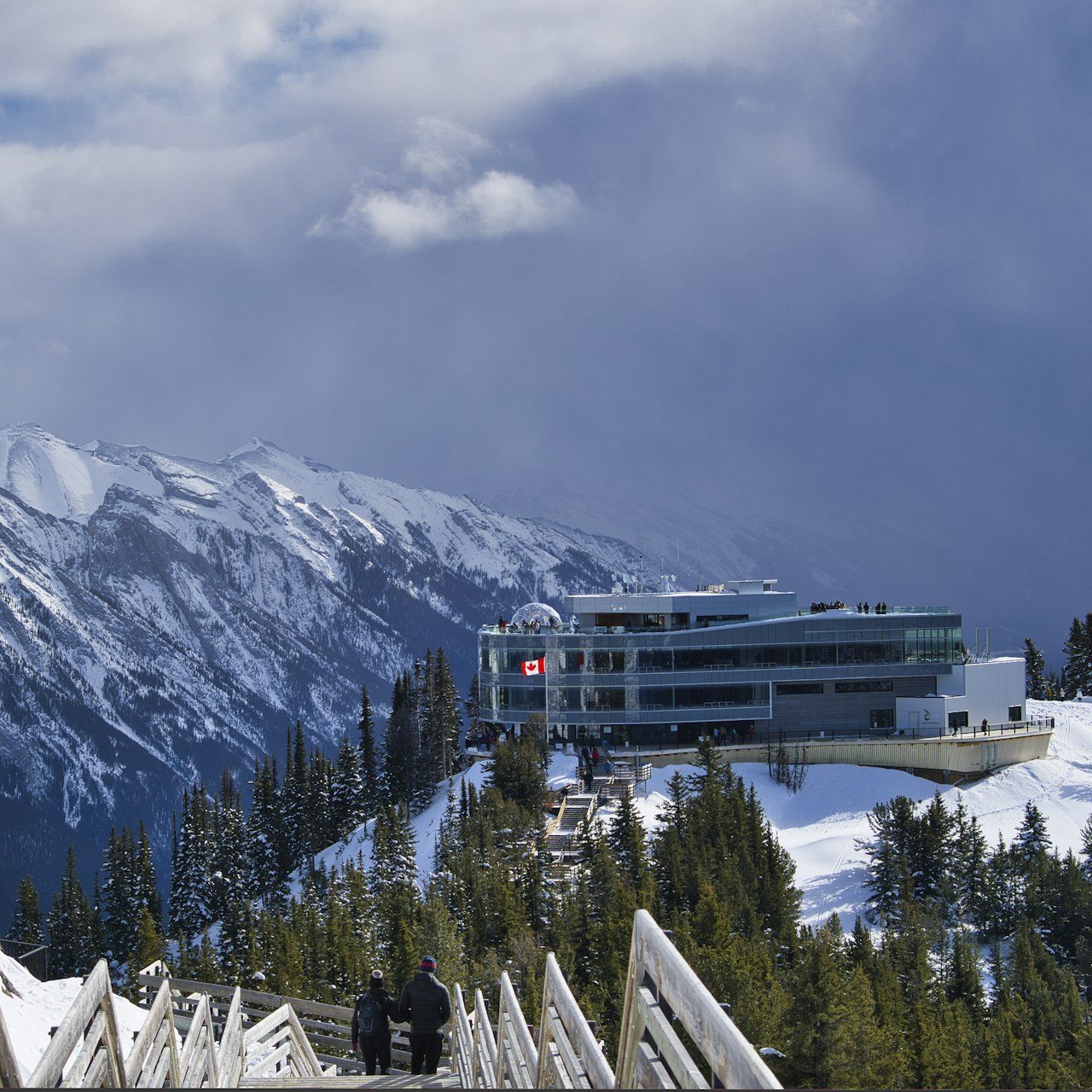
The Banff Gondola and the Upper Hot Springs sit side by side on Sulphur Mountain, which makes them an easy afternoon together. Roam’s Route 1 bus serves both, so there’s no need to drive. Ride the gondola up while there’s still daylight, walk the ridge boardwalk and watch the light change over the Bow Valley before heading back down. If dinner at the summit is part of the plan, note that Sky Bistro is closed from January 4 to 15, 2027.
Then finish at the Banff Upper Hot Springs, open daily from 10 a.m. to 10 p.m. Adult admission is $19.75, and you can rent a swimsuit for $5 and a towel for $3, which beats carrying wet things around town all evening. Entry is first come, first served, so earlier in the day or later in the evening is the easier time to go on weekends and holidays. When temperatures drop below −30 °C, staff may close the pool for the cold.
Book Afternoon Tea at the Fairmont Banff Springs
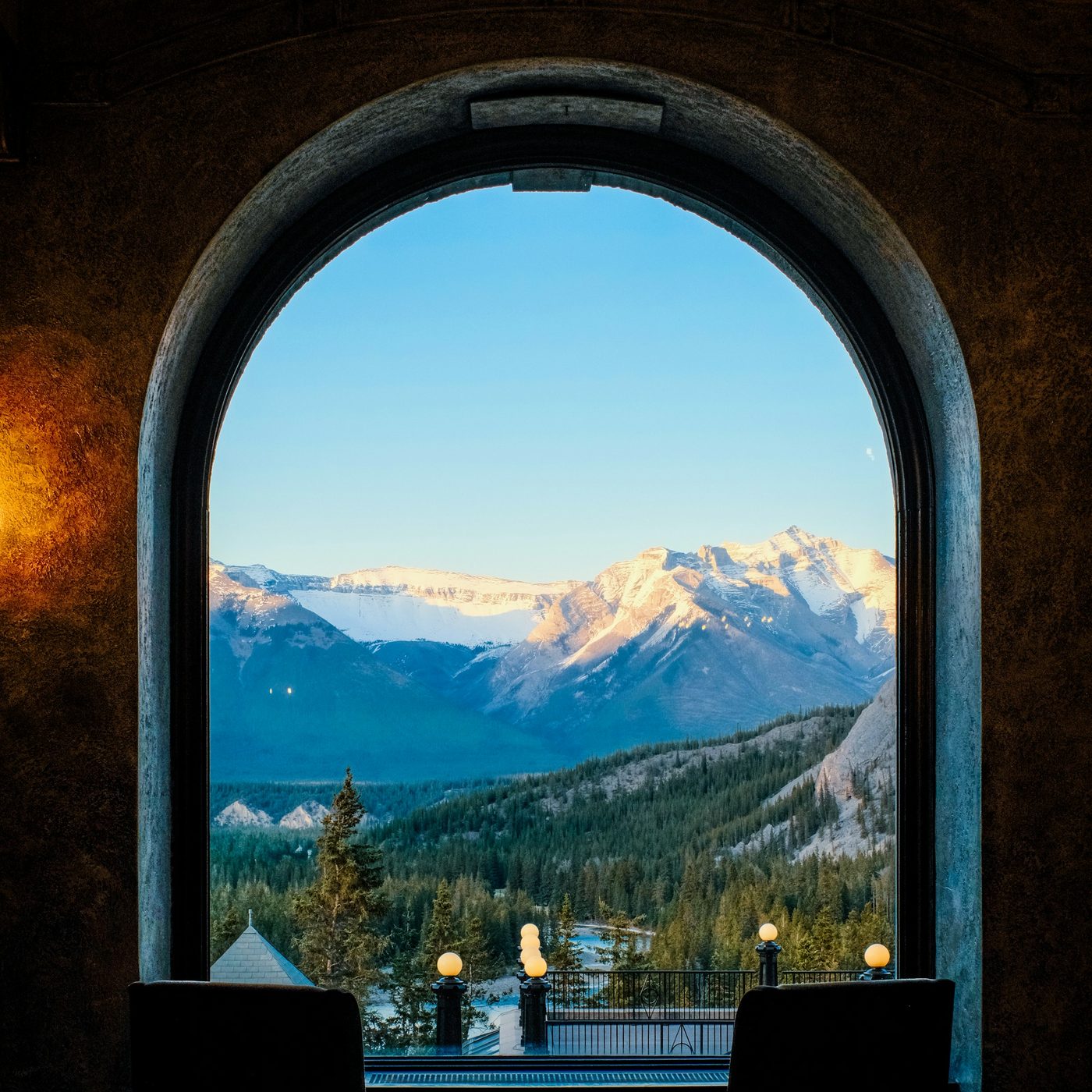
You don’t need to stay at the Fairmont Banff Springs to spend an afternoon there. Rocky Mountain Afternoon Tea is served daily from 11:30 a.m. to 2:30 p.m. in the Rundle Bar, with scones, finger sandwiches and pastries on a tiered stand. Reservations are taken through OpenTable, by email or by phone, and they’re worth making in the holiday season.
Skate on Fenland’s Meadow Rink
You don’t have to drive to Lake Louise to skate outdoors. The Town of Banff runs the Fenland’s Meadow outdoor rink in winter, and you can rent skates at the Fenlands Banff Recreation Centre. Check the town’s rink conditions page before you go, since the ice depends on the weather.
Catch the Light at Vermilion Lakes
The Vermilion Lakes sit just west of town, with Mount Rundle rising across the water, and early morning or late afternoon is the time to go. Admire the ice from the shore, because Parks Canada doesn’t monitor natural ice for safety.
Skiing and Snow Sports
Ski Banff’s Three Resorts
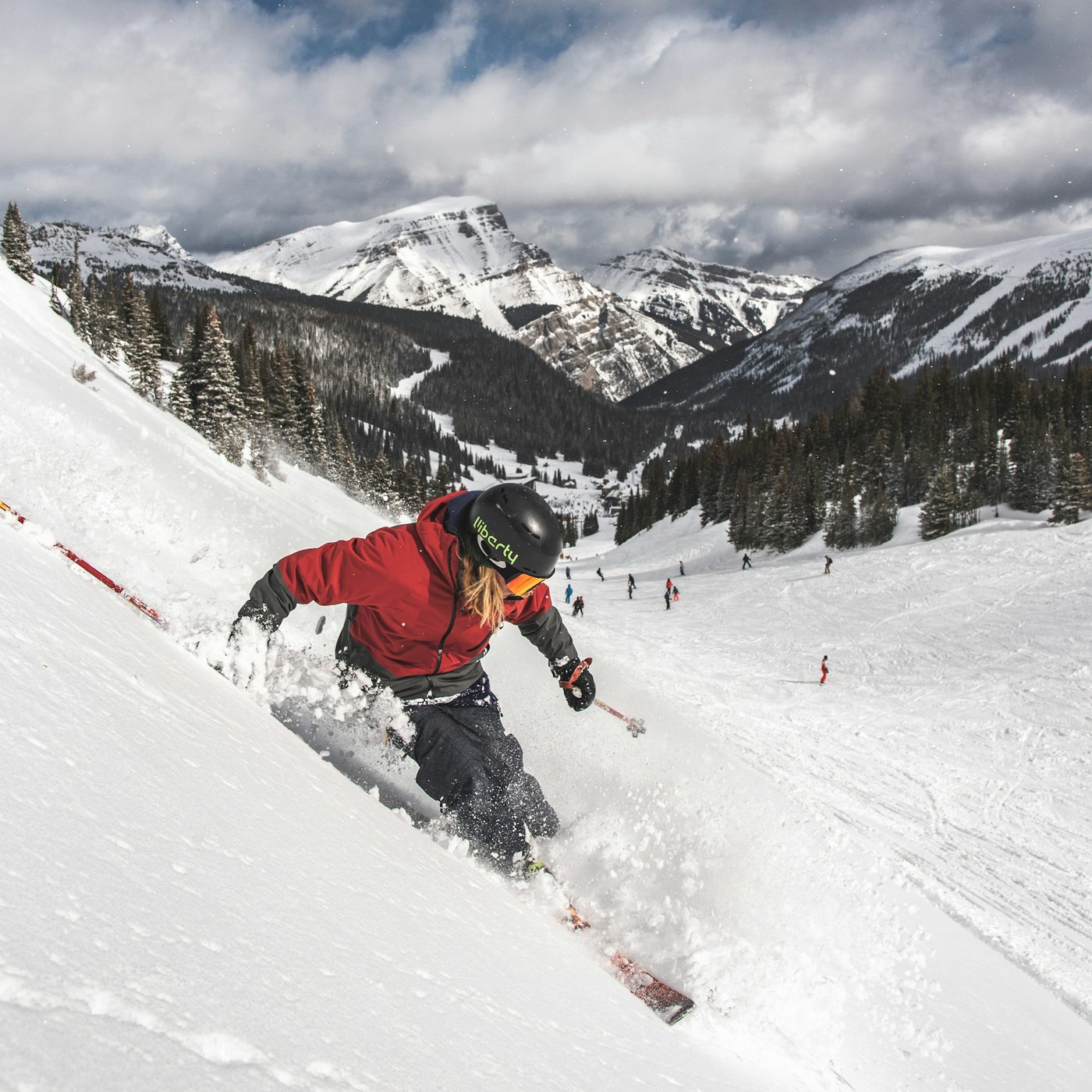
Banff Sunshine, Lake Louise Ski Resort and Mount Norquay give you enough terrain to fill anything from a single ski day to a whole week. For 2026, Sunshine Village and Lake Louise have tentative opening dates of November 6, Norquay plans to open on November 7, and Lake Louise’s season runs to May 2, 2027. Every opening depends on snow, and terrain expands as the snowpack builds.
Complimentary ski shuttles run from several Banff hotels to all three. They’re free with a SkiBig3 lift ticket or season pass, an Ikon Pass, a Mountain Collective pass or a Rocky Mountain Passport. Seats are first come, first served, so it’s worth turning up early when fresh snow is in the forecast.
Cross-Country Ski on Moraine Lake Road
Moraine Lake Road is closed to personal vehicles year-round. Once enough snow arrives, the 8.9-kilometre road becomes a winter trail, track-set for cross-country skiers as far as a viewpoint of Consolation Valley and the Ten Peaks. The classic tracks are for skiing only, with a flat groomed lane beside them for walkers and snowshoers. Beyond that viewpoint the road crosses large avalanche paths, and Moraine Lake itself is inaccessible in winter because of avalanche hazard.
Go Snow Tubing at Mount Norquay
Tubing at Norquay is an easy win for families, mixed groups or anyone who wants time on the snow without learning to ski. Riders need to be at least four years old and 42 inches tall, and capacity is limited, so buy tickets before you go. Evening sessions run from 5 to 8 p.m. on Fridays and Saturdays from December 26 to mid-March, plus a handful of holiday nights after Christmas and in mid-February. They’re a fun way to use the long winter dark without giving up a daytime activity.
Take a Horse-Drawn Sleigh Ride
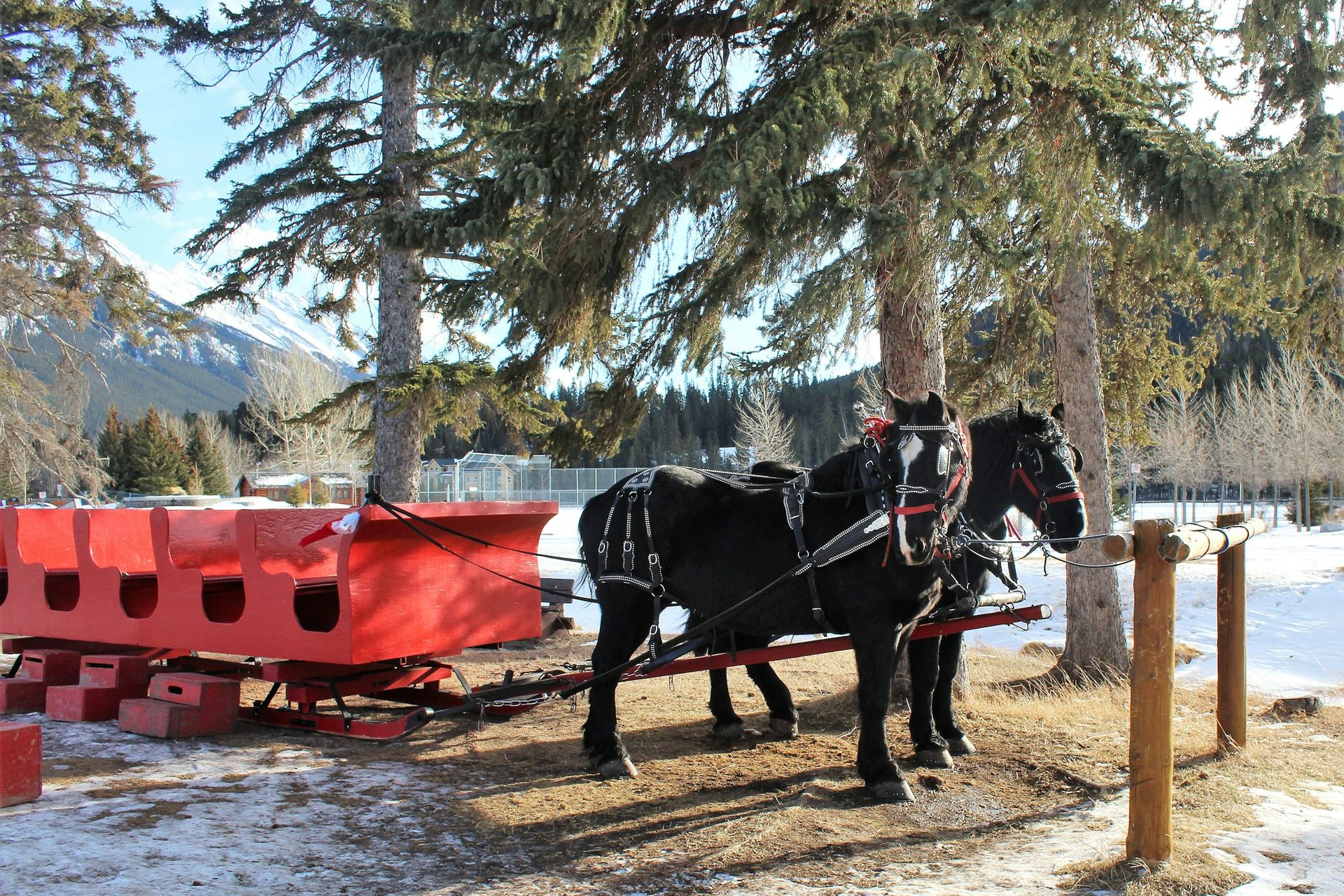
A horse-drawn sleigh ride is about as classic as a Banff winter gets. The ride takes around forty minutes through open meadows in the Bow River valley, with mountains all around. Afterwards, there’s a hot drink by the campfire. Group rides start from $52 per person, children three and under ride free, and private sleighs for two or four cost more. Dress as though you’ll be sitting still outside, because you will be.
Go Dog Sledding Near Canmore
Dog sledding doesn’t happen inside the national park, but tours run just outside it around Canmore and Kananaskis Country. Snowy Owl Sled Dog Tours has been running in the Bow Valley since 1983, with winter trips from a two-hour introduction up to four-hour, full-day and overnight tours. Howling Dog Tours also runs winter trips near Canmore, starting again in December 2026. Dog-sled tours fill up early, so if this is one of the experiences bringing you to Banff, book it before the rest of the itinerary sets.
Short Drives From Town
Walk Stewart Canyon at Lake Minnewanka
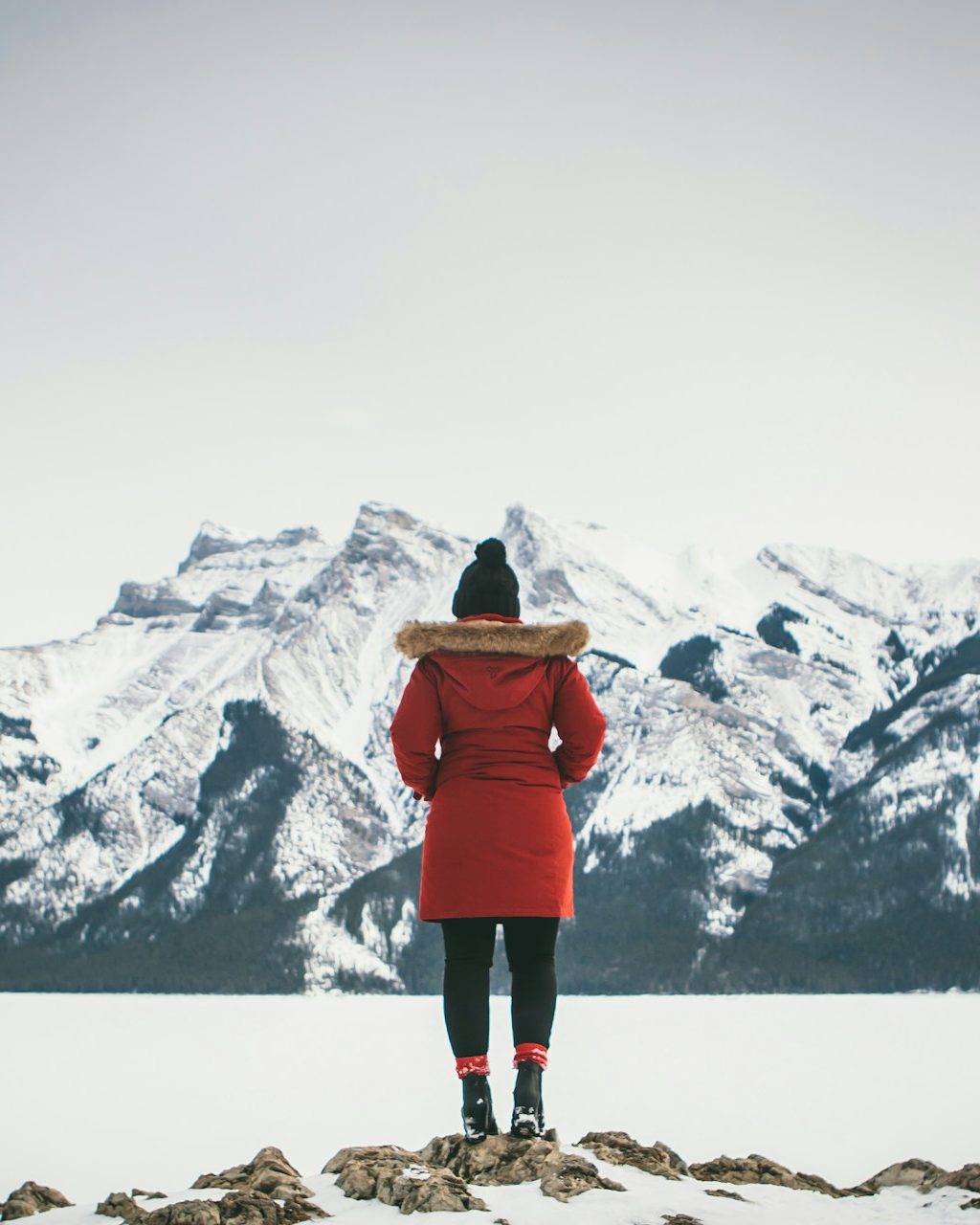
Banff’s canyons change completely once winter settles in. Waterfalls turn into blue-white columns of ice, the trails pack down hard, and ice cleats make the difference between enjoying the walk and shuffling carefully through it. Stewart Canyon begins at the Lake Minnewanka day-use area and follows the Cascade River for a gentle 1.5 kilometres each way, though it can get very icy.
The western section of the Lake Minnewanka Loop Road is closed to driving from November to May to reduce activity beside an important wildlife corridor. You can’t drive the full loop in winter, but the Lake Minnewanka day-use area is still the trailhead for Stewart Canyon.
Is Johnston Canyon Open This Winter?
⚠️ Johnston Canyon closure: Since October 13, 2026, Parks Canada has closed the regular Johnston Canyon trail to both the Lower and Upper Falls for rock-slope work, along with the main parking lot and washrooms. The Upper Falls, frozen about 30 metres high, and the Ink Pots are still reachable by the Moose Meadows trail. It’s a longer forest route rather than the usual easy canyon walk. Check Parks Canada’s winter trail page for current conditions and any reopening date before you drive out.
Drive the Bow Valley Parkway
The Bow Valley Parkway is the slower, quieter road between Banff and Lake Louise. It’s 48 kilometres of two-lane pavement with pull-offs, picnic areas and trail access along the way. If you’re driving to Lake Louise anyway, take the parkway one way and the Trans-Canada Highway the other. It adds variety without needing a separate sightseeing day. From March 1 to June 25, the 17-kilometre eastern section between Fireside day-use area and Johnston Canyon is closed to all travel from 8 p.m. to 8 a.m. to protect a wildlife corridor, so make that drive in daylight.
Watch for Wildlife
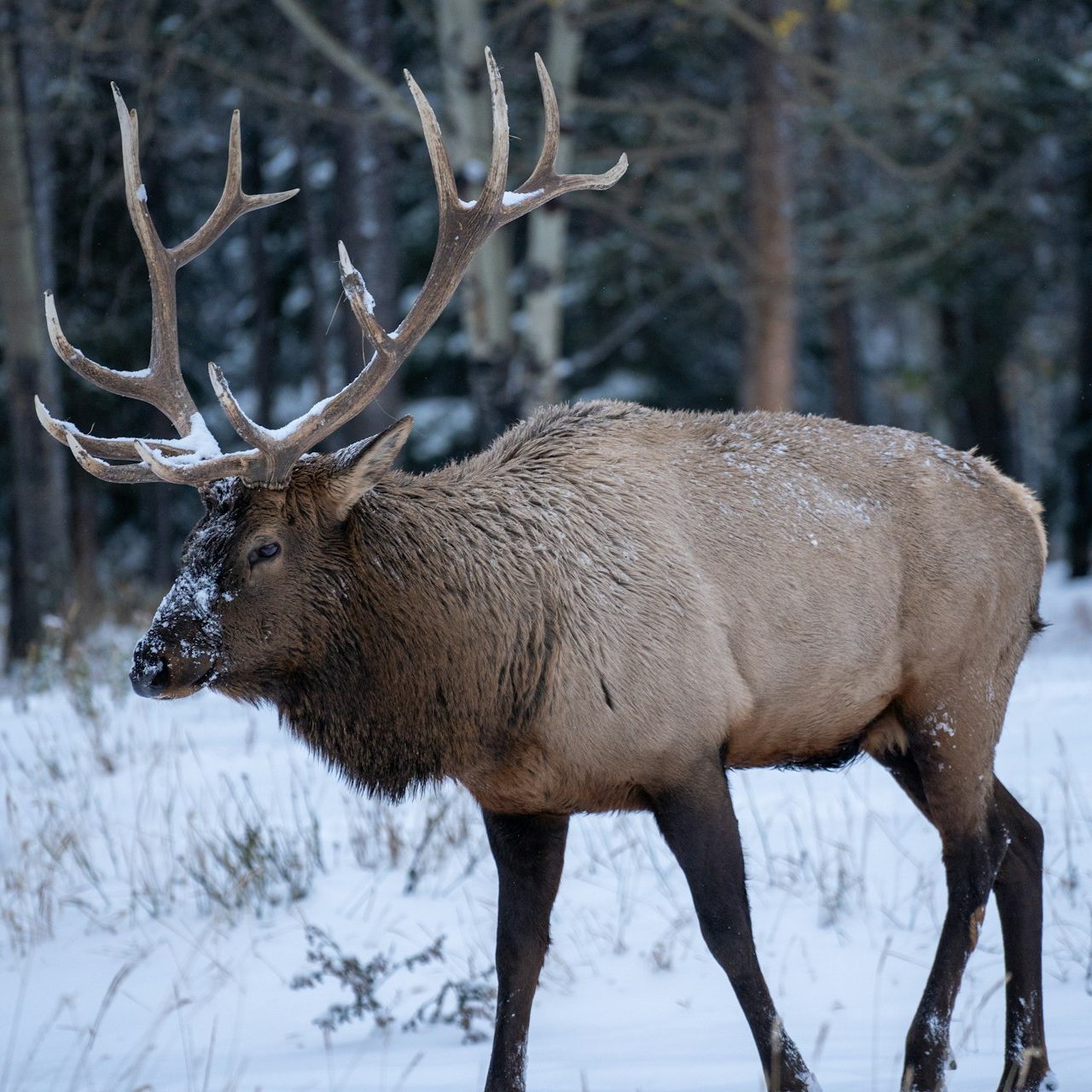
Bears spend most of the winter denning but can wake at any time, and cougars, wolves and other wildlife stay active all year. Give every animal plenty of space and never follow tracks toward one. Keep carrying bear spray on winter trails, within easy reach, and know how to use it.
Day Trips From Banff
Walk and Skate at Frozen Lake Louise
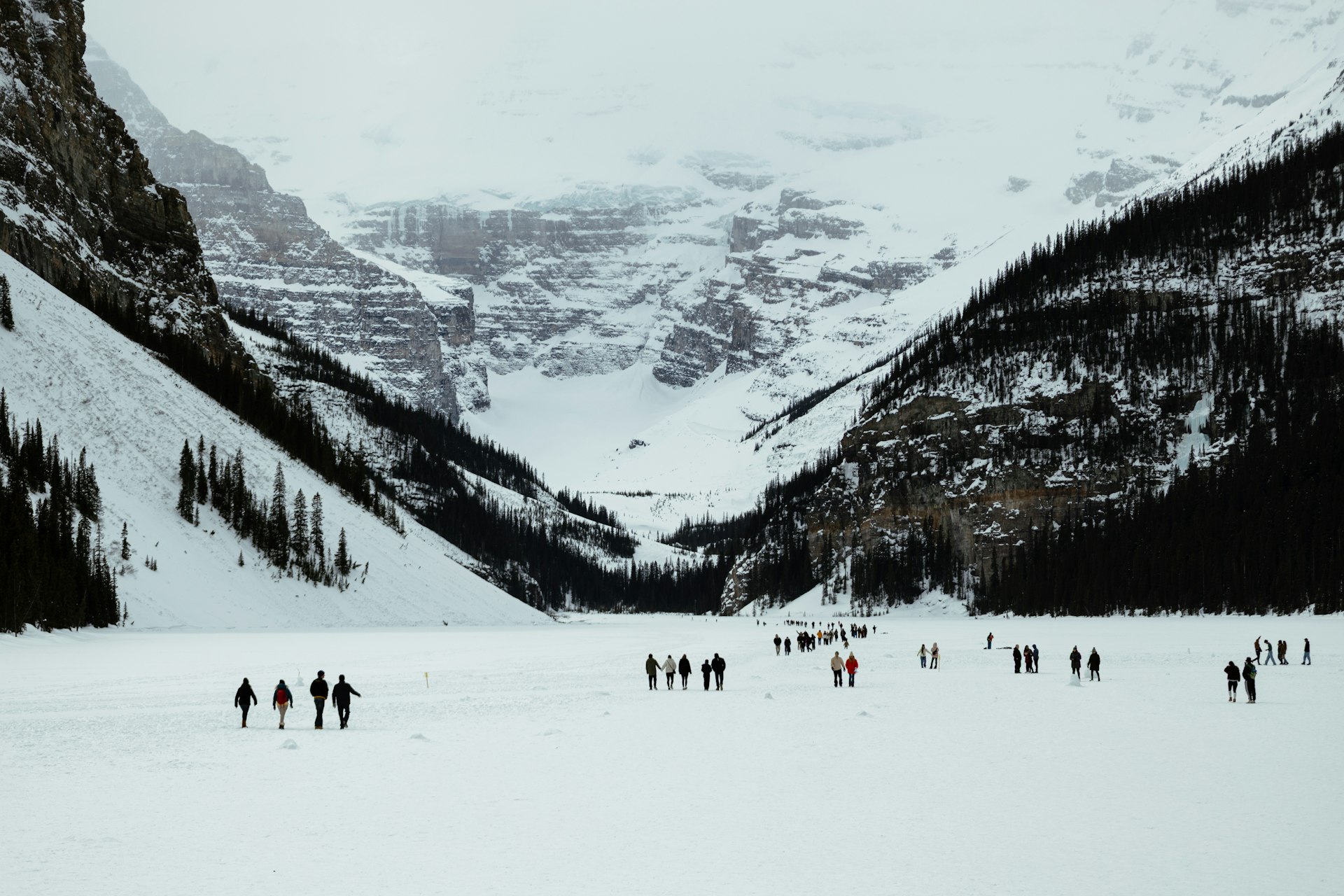
Lake Louise in winter is one of those Rockies scenes that lives up to the photographs. The lake turns white beneath the mountains, the crowds are lighter than in summer and the easy lakeshore walk gives you time with the view.
Skating on the lake in front of the Fairmont Chateau Lake Louise is a favourite winter pastime, with Victoria Glacier at the far end of the ice. You can rent skates at Chateau Ski & Snow Rentals. It’s still a natural lake, though, and Parks Canada doesn’t monitor natural ice for safety. Stick to the skating area and stay off the ice whenever conditions look uncertain.
After skating, follow the lakeshore trail about 2.3 kilometres from the Chateau to the back of the lake. Louise Falls hangs there, frozen into a wall of ice roughly 100 metres high. Enjoy it from the trail rather than from directly below, since falling ice is a real hazard. Past the boathouse, the trail runs beneath an avalanche path on Mount Fairview. Parks Canada asks walkers not to stop under the slope or cross it, so keep to the marked route the whole way.
Save the higher trails for summer. The Lake Agnes and Plain of Six Glaciers tea houses close after Thanksgiving in mid-October, and Parks Canada calls both hikes unsafe from November through mid-May because of avalanche hazard. A packed track in the snow doesn’t make a slope safe, so keep the Lake Agnes Tea House hike for a summer trip.
Drive Part of the Icefields Parkway
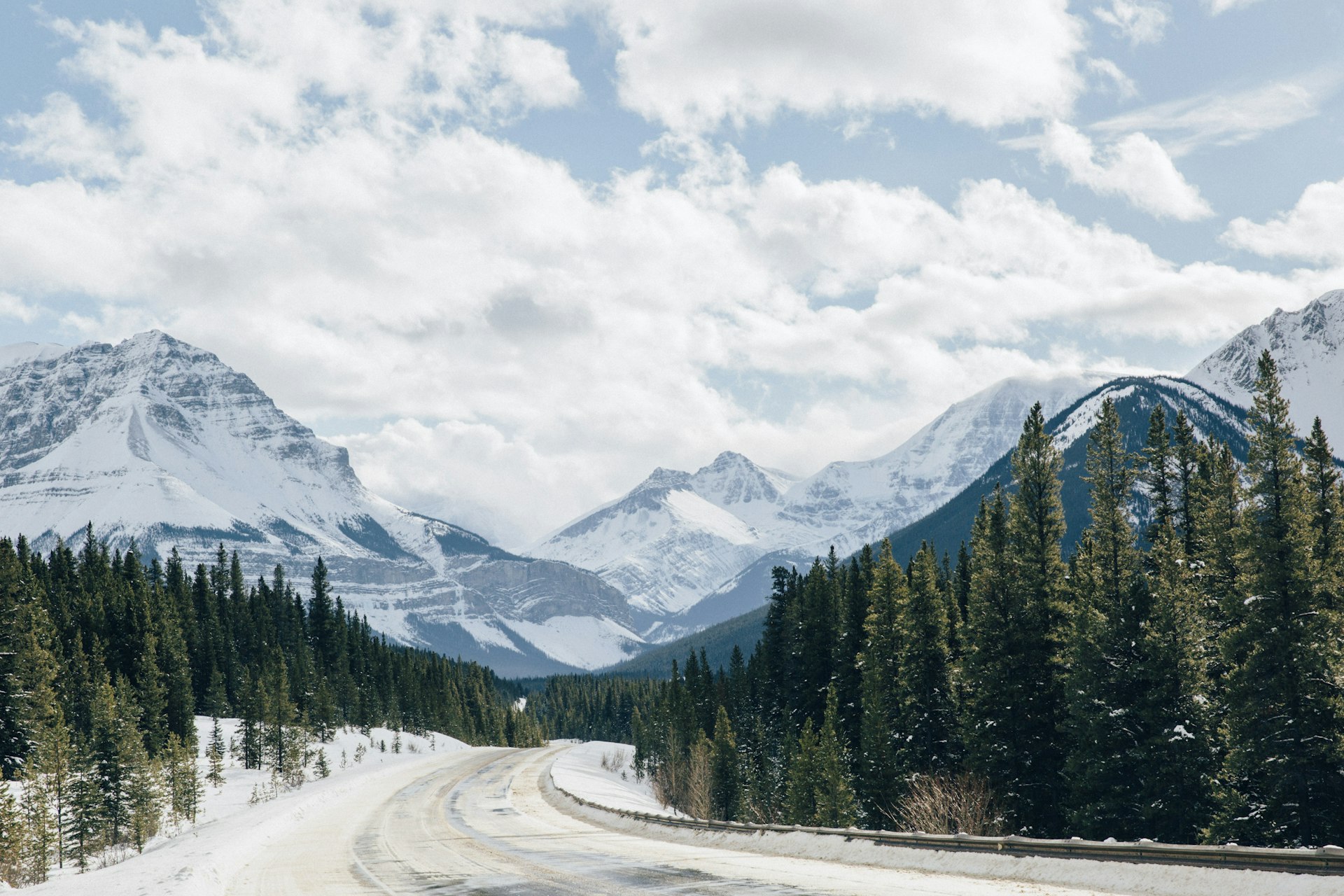
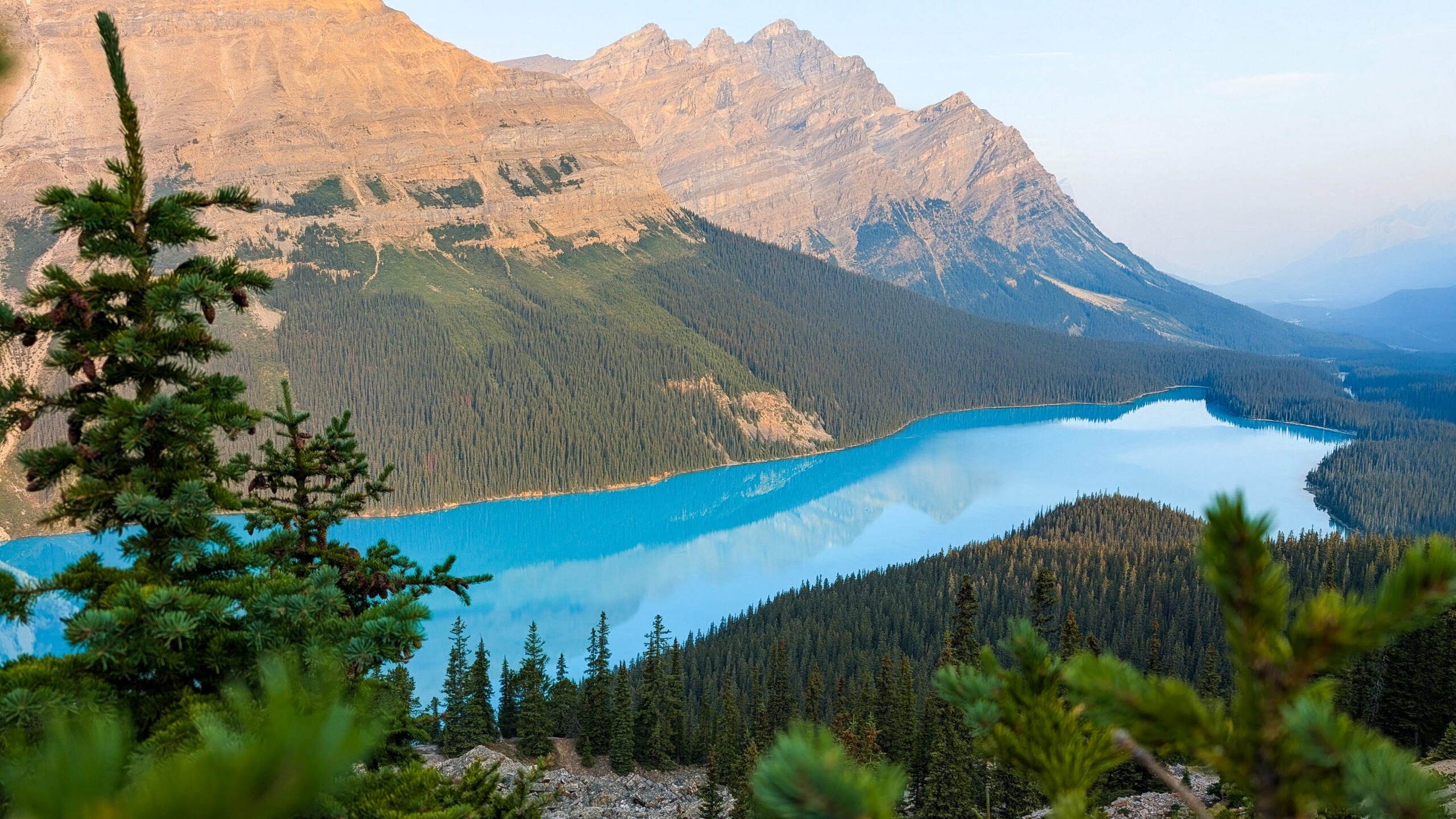
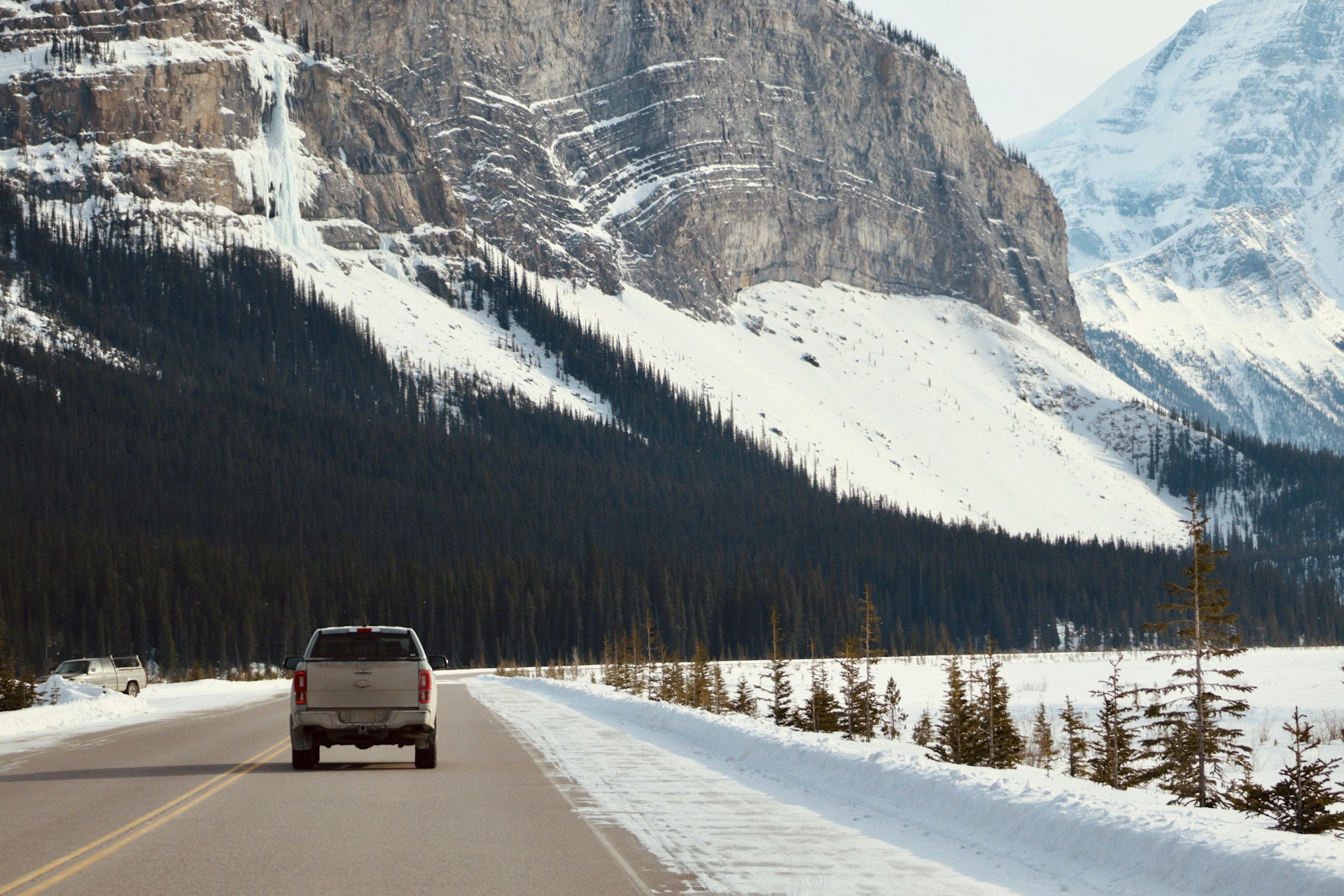
On a clear winter day, the drive north from Lake Louise toward Bow Lake and Peyto Lake shows a quieter, snow-covered side of the park. Peaks rise straight above the highway, and the open road stretches ahead. It takes more planning than a day around town, because services are limited and the weather changes fast. Check road conditions, carry winter supplies and treat turning back early as part of the plan. Before you go, read our guide to driving the Icefields Parkway in winter for the tire rule, the winter stops and where to turn back.
Evenings, Events and Stormy Days
Visit During the SnowDays Festival
SnowDays brings snow sculptures, ice carving and winter events to Banff and Lake Louise, running from January 21 to February 7, 2027, with sculptures around town throughout. The Art of Ice carving competition takes over downtown Banff from February 5 to 7.
Ice Magic at Lake Louise runs from February 3 to 7, 2027. It’s an exclusive event for guests of participating Lake Louise hotels and residents of nearby communities. Hotel guests get complimentary tickets through their accommodation from October 26, 2026. Every ticket holder travels on the event shuttle, since there’s no parking at the site.
Spend Christmas in Banff
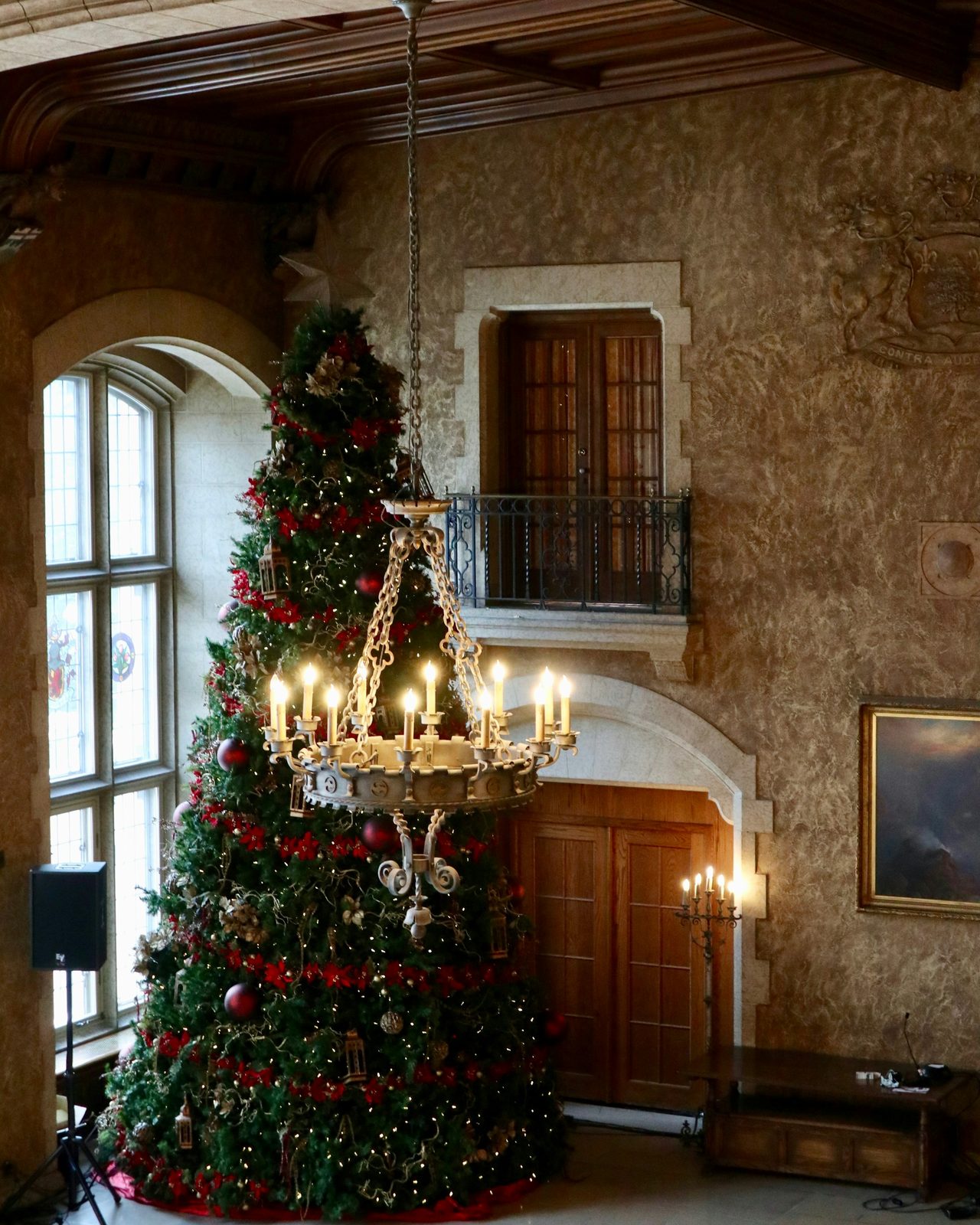
The Banff Christmas Market fills the Banff Train Station from Thursday to Sunday, November 19 to December 13, 2026. Over its sixteen days it brings more than 200 vendors, live music, warm drinks and festive food. Entry is ticketed, so book ahead if the market is a main reason for a December visit.
If you’re travelling with kids, Santa spends select dates from November 21 to December 31 at the top of the Banff Gondola. Closer to town, In Search of Christmas Spirit fills the Cascade of Time Garden on Cave Avenue on select dates from November 12 to January 3. The hot springs stay open on Christmas Day, Boxing Day and New Year’s Day, which makes a warm end to a holiday evening.
Spend a Stormy Day in Banff’s Museums
The Whyte Museum of the Canadian Rockies on Bear Street is a good answer to a day when the clouds sit on the peaks. Its galleries and archives tell the story of the mountains and the people who settled the valley. It’s open daily from 10 a.m. to 5 p.m., except December 24 to 26 and January 1, and adult admission is $15.
Across the Bow River bridge, the Buffalo Nations Luxton Museum at 1 Birch Avenue focuses on the First Nations of the Northern Plains and the Rockies. It’s open daily from 11 a.m. to 5 p.m., and adult admission is $15. The Banff Park Museum is the one to skip on a winter trip, since it closes from October 16 to May 14.
Save the Cave and Basin for a Cold Afternoon
When the wind picks up or a storm hides the mountains, head to the Cave and Basin National Historic Site. Its interactive exhibits and short films tell the story of the hot springs whose discovery led to Canada’s first national park. From October 16 to May 14, it’s open Thursday to Monday, 11 a.m. to 5 p.m. It closes on December 25 and for a few short breaks, including December 14 to 17, 2026, and March 15 to 18, 2027.
When the weather improves, the 2.8-kilometre Marsh Loop starts at the Cave and Basin parking lot and circles wetlands that come alive with birds in winter. Fresh snow turns it into a chance to read wildlife tracks.
What Is Banff Winter Weather Really Like?
Cold and bright is the short answer, but Banff’s winter weather has more variety than many first-time visitors expect. Some days are clear and comfortable with the right layers. Others bring deep cold, fresh snow or fast-changing mountain conditions. The table below draws on ten winters of daily Environment Canada records from the Banff townsite station, November 2015 through March 2025. It’s a good starting point, and the short-range forecast fills in the rest.
| Month | Average high | Average low | Daylight (mid-month) | Nights at −20 °C or colder |
|---|---|---|---|---|
| November | 1 °C | −8 °C | About 9 hours | About 1 in 13 |
| December | −4 °C | −13 °C | Under 8 hours | About 1 in 5 |
| January | −3 °C | −13 °C | Just over 8 hours | About 1 in 5 |
| February | −3 °C | −14 °C | About 10 hours | About 1 in 3 |
| March | 4 °C | −9 °C | About 11¾ hours | About 1 in 10 |
Two things stand out in those records. February has the most bitterly cold nights, with roughly one in three dropping to −20 °C or below. Yet every month from December through February has also produced afternoons above 7 °C. So pack for serious cold and enjoy the milder days when they arrive. A sunny afternoon can feel much warmer than the forecast suggests. Once the sun drops behind the peaks, the temperature falls just as quickly.
Banff in December
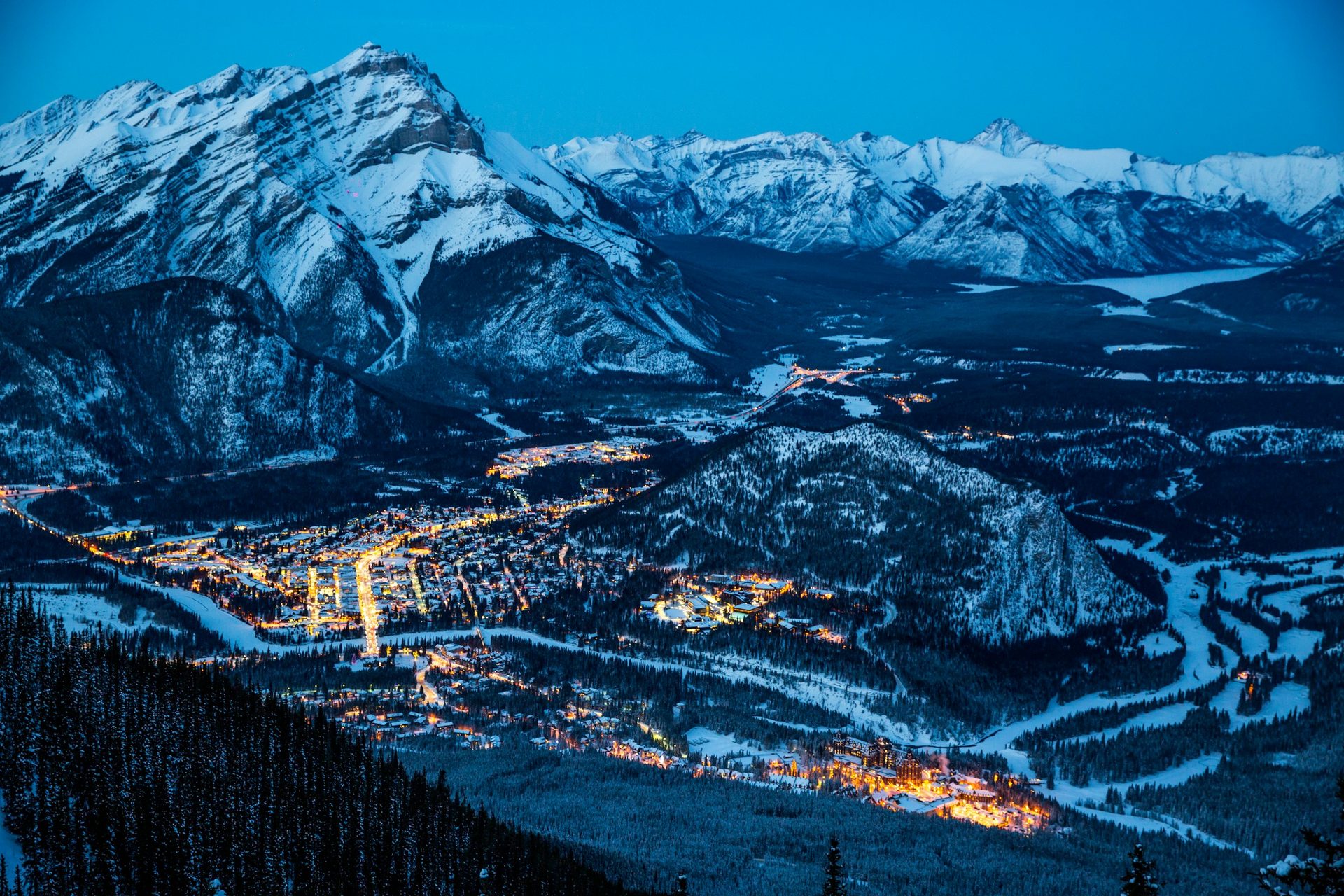
December in Banff is festive, snowy and short on daylight. Around the winter solstice, the sun rises at about 8:45 a.m. and sets by about 4:35 p.m. That still leaves time for a ski day or a visit to Lake Louise if you start early. Plan skiing, skating and winter walks for the middle of the day. Save the hot springs, dinner and the Christmas lights for the dark hours.
What Is the Best Month to Visit Banff in Winter?
March is our pick for the best overall month. Around three days in four climb above freezing, daylight stretches past eleven hours and the snowpack is still deep. The ski resorts are well into their long spring season, and snowshoeing and winter walking are often still excellent. The longer days give you more room, too. You can ski or explore Lake Louise and still get back to town in daylight.
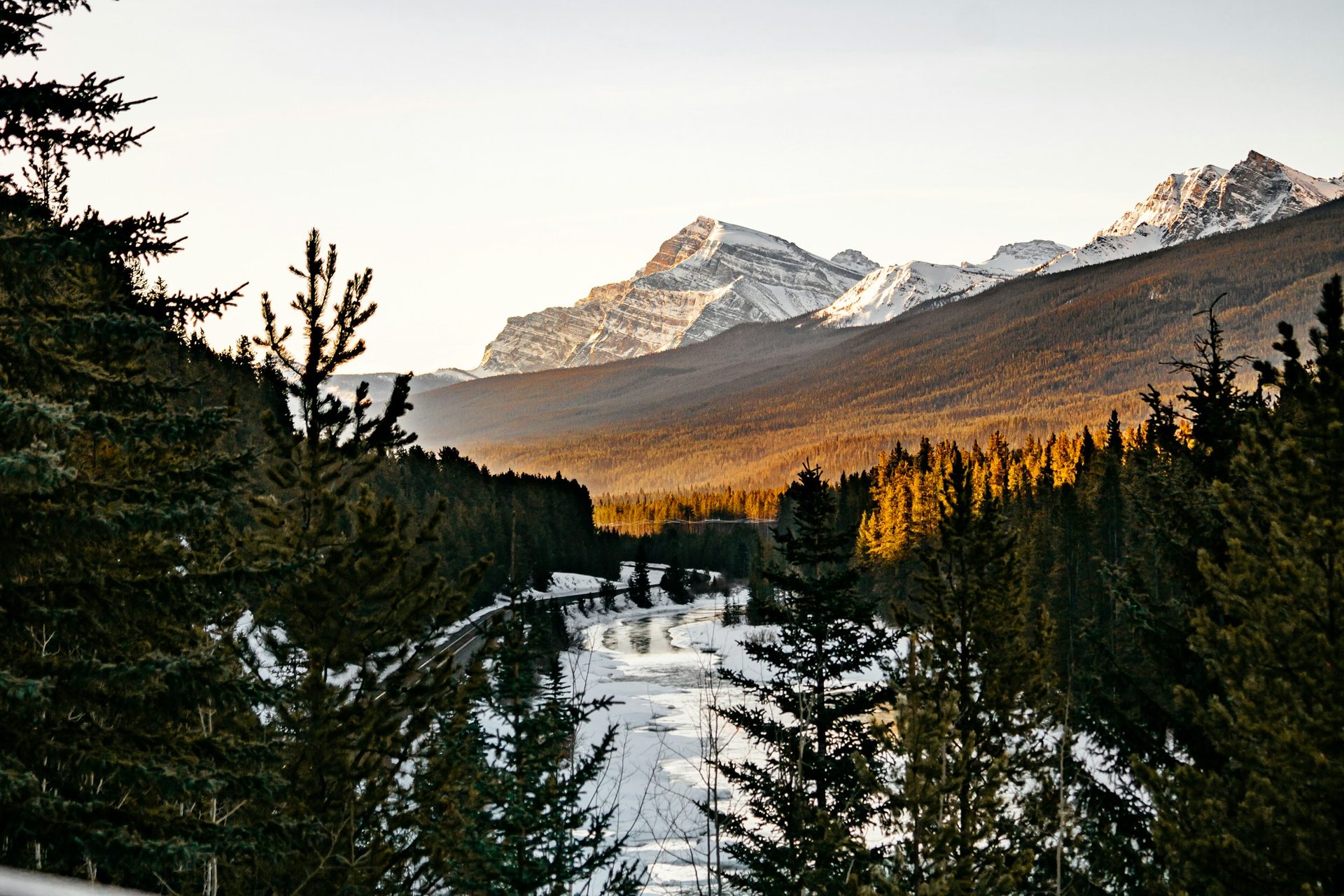
Choose the first week of February instead if festivals matter more than mild afternoons. SnowDays and the Art of Ice competition overlap from February 5 to 7, 2027. February is colder, especially overnight, so plan shorter outdoor stops and keep a warm indoor option nearby. January suits travellers after quiet streets and a deep-winter feel. December works well if you want Christmas events alongside skiing. There isn’t a bad month, only a choice between snow, daylight, festivals and lighter crowds. If you’re coming before the snow settles, our guide to Lake Louise and Moraine Lake in October covers that in-between season.
Getting Around Banff in Winter
Can You Visit Banff in Winter Without a Car?
Yes, you can have a full winter trip in Banff without renting a car. Roam Transit’s Route 1 connects downtown with the Banff Gondola and the Upper Hot Springs. Route 8X runs daily, year-round, between Banff, Lake Louise Village and the Lake Louise lakeshore. Seats on the 8X can be reserved ahead, which is worth doing when Lake Louise is the centrepiece of your day. Check the time of the last bus back before you set off on the lakeshore walk. If you’re only riding between the village and the lakeshore in winter, you pay the driver with exact cash. Add the free ski shuttles and a walkable town centre, and a car-free winter trip is easier than many first-time visitors expect. Our Banff shuttle and transit guide has the routes, fares and park pass options in more detail.
When a Car Is Worth Having
When you want the edges of the park on your own schedule, a car makes the Bow Valley Parkway, Lake Minnewanka or a stretch of the Icefields Parkway much easier. Winter driving takes more preparation than a summer road trip. Snow tires or chains are required by law on the Icefields Parkway and Highway 93 South from November 1 to March 31. The rule also applies at any other time the roads are covered in snow or ice. Look for the mountain snowflake or M+S marking on the tire. If your trip crosses into British Columbia, perhaps through Yoho National Park to Emerald Lake, the same requirement applies on Highway 1 in Yoho from October 1 to April 30.
Check 511 Alberta before every longer drive. Cell coverage isn’t reliable throughout the park, so download directions and road information before leaving town. Keep warm clothing, water and some extra food in the car in case a closure stretches the day. Speed limits are 90 km/h on the main routes and 60 km/h on secondary roads unless signs say otherwise. Slowing down for poor visibility or wildlife near the road is part of driving here. You’ll also need a national park pass whenever you stop in the park.
What to Pack for Banff in Winter
Layers do most of the work. Start with a moisture-wicking base layer, add a fleece or insulated mid-layer and finish with a windproof, water-resistant shell. That makes it easy to adjust between a −15 °C morning, a warm car and a sunny afternoon. Bring a toque, warm gloves and insulated boots with good tread. Pack spare socks if you’ll be out most of the day, since cold, damp feet end an outing quickly.
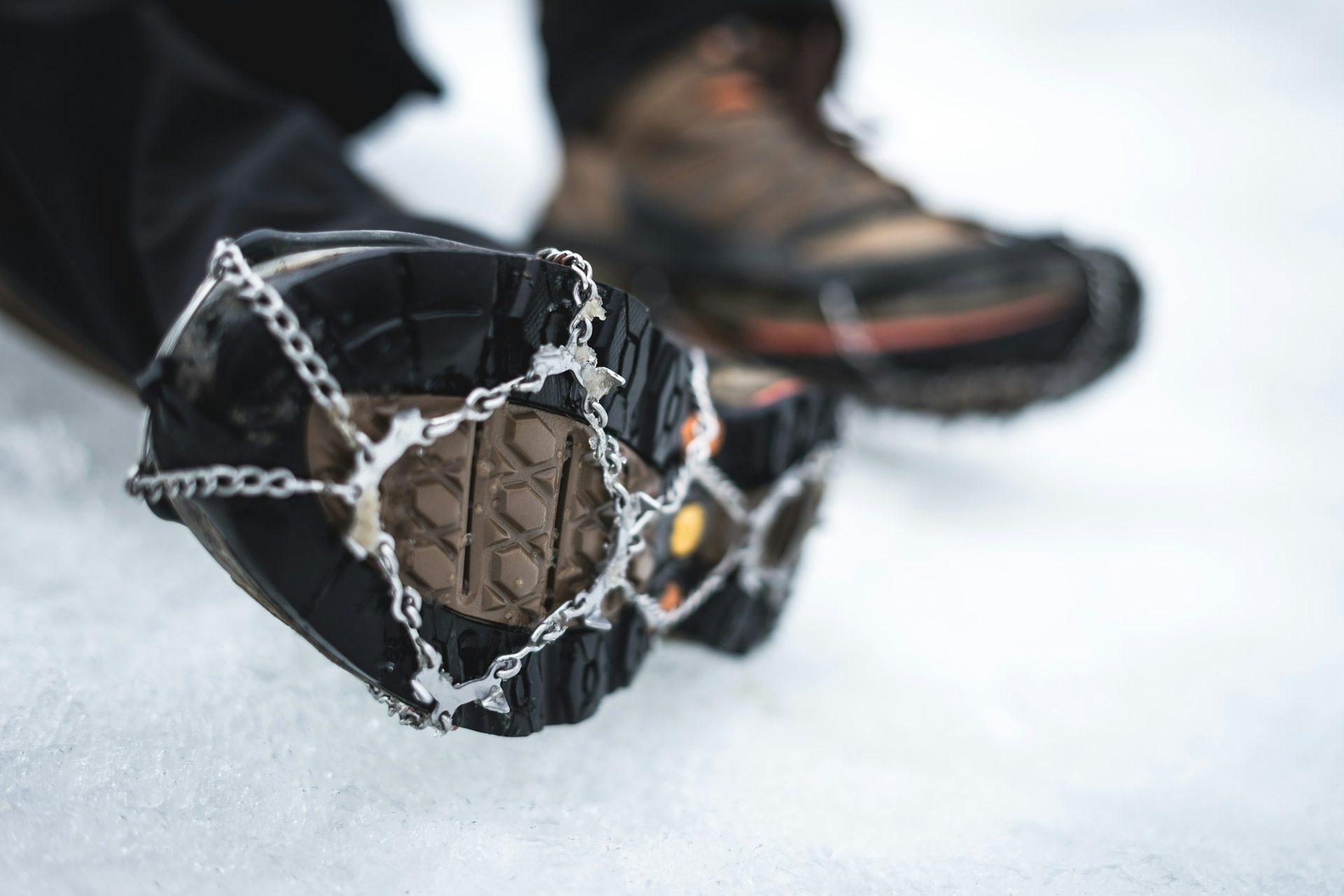
Ice cleats are the one item we’d never skip. They stretch over your boots and grip packed snow and ice, turning a nervous shuffle on Tunnel Mountain or the Lake Louise lakeshore into a comfortable walk. If you forget them, the Banff Visitor Centre and most outdoor stores in town sell them.
Sunglasses and sunscreen belong in the bag too, because snow reflects a surprising amount of light. Add a thermos, snacks, hand warmers and a headlamp for the early sunsets. Keep your phone close to your body so the battery lasts in the cold, and tuck in a swimsuit so an unplanned evening at the hot springs is easy.
Should You Rent or Buy Winter Gear in Banff?
Rent the bulky gear and think about buying your own cleats. Banff Adventures on Bear Street rents snowshoes, skates and ice cleats for $18 a day, cross-country ski packages for $25 and warm winter boots for $10. That makes it easy to try snowshoeing on Fenland Trail without packing snowshoes of your own. Reserve online and collect everything at the shop downtown. Every rental needs a signed waiver and a credit card. Staying at the Fairmont Chateau Lake Louise? Chateau Ski & Snow Rentals, just off the lobby, has snowshoes as well as skates.
Cleats are worth owning because you’ll wear them almost every day. A family of four renting them for a week would pay around $500, so compare that with buying a set before you fly or picking some up in town when you arrive. Wherever you buy them, try them on over the boots you’ll actually wear. A pair that slides around a bulky winter boot won’t grip when you need it.
Frequently Asked Questions
Is January Too Cold for Banff?
No. January is cold, with average overnight lows near −13 °C, but close to four days in ten still climb above freezing in town. Plan flexible days: ski, skate or walk through the brighter middle hours, then head indoors when the temperature starts to fall. Cold snaps below −20 °C do happen, so leave room to shuffle activities rather than forcing a long outdoor plan on a bitter day.
Can You Visit Moraine Lake in Winter?
Not the lake itself. Moraine Lake is inaccessible in winter because of avalanche hazard, and its road becomes a cross-country ski and snowshoe trail as far as the Consolation Valley viewpoint. For a frozen lake you can walk beside, go to Lake Louise instead.
Should You Stay in Banff or Lake Louise in Winter?
Stay in Banff if you want restaurants, a walkable town and the widest choice of things to do after dark. The complimentary ski shuttles run from several Banff hotels to all three resorts, so skiers lose very little. Lake Louise suits a quieter trip built around the lake and the ski hill. Our guide to staying in Banff or Lake Louise compares the two in more detail.
Planning Your Banff Winter Trip
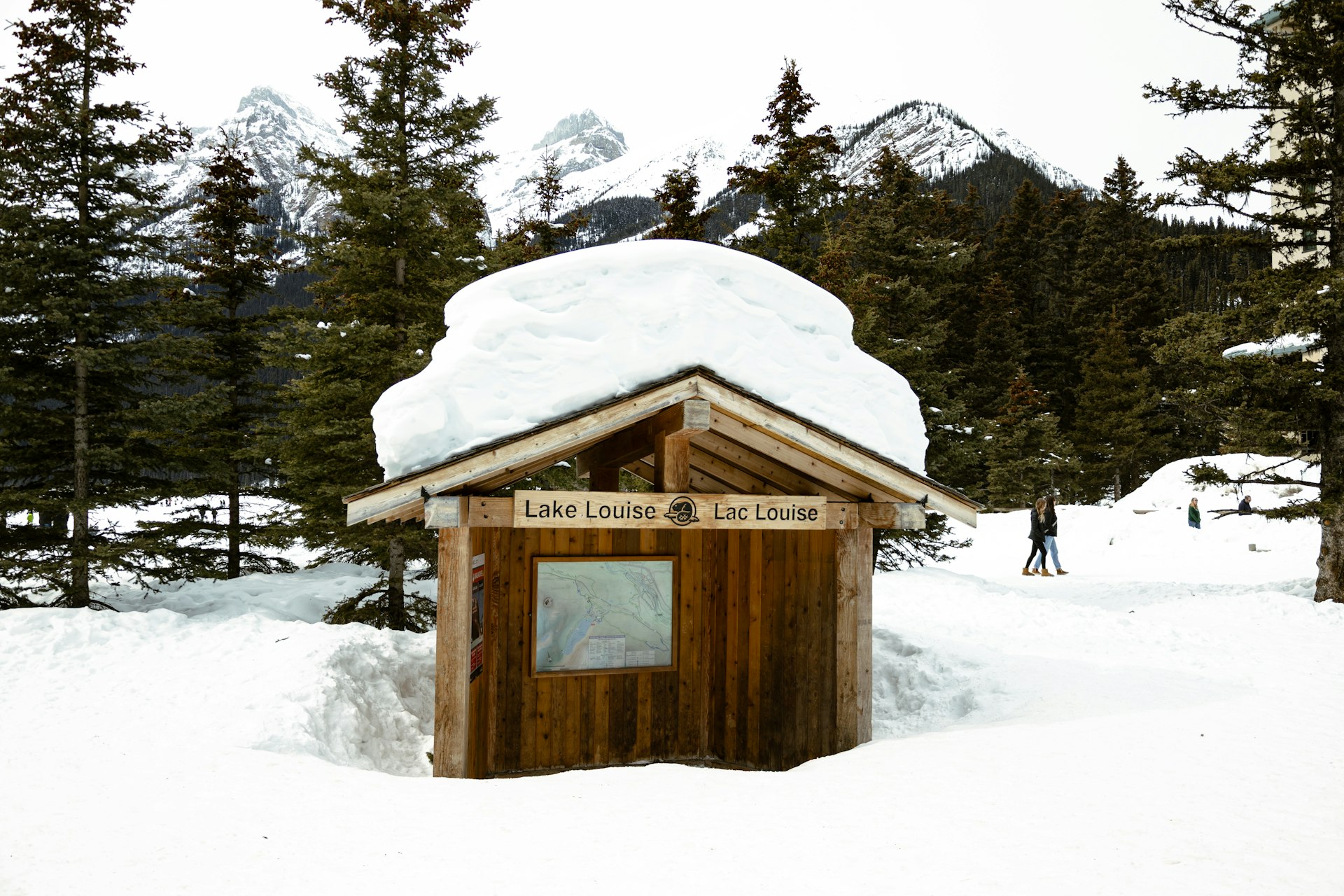
Choose the two or three experiences you care about most, then leave some room for weather. A clear day is the one for Lake Louise or the Icefields Parkway. Save the hot springs, the Whyte Museum or a slow afternoon on Banff Avenue for a stormy one. You don’t need to fill every hour. Some of the best parts of Banff in winter are the simple ones: fresh snow on Banff Avenue, a quiet trail close to town or a warm drink after coming in from the cold.
When you’re ready to put the days in order, the three-day Banff itinerary is a good place to start.

Leave a Reply