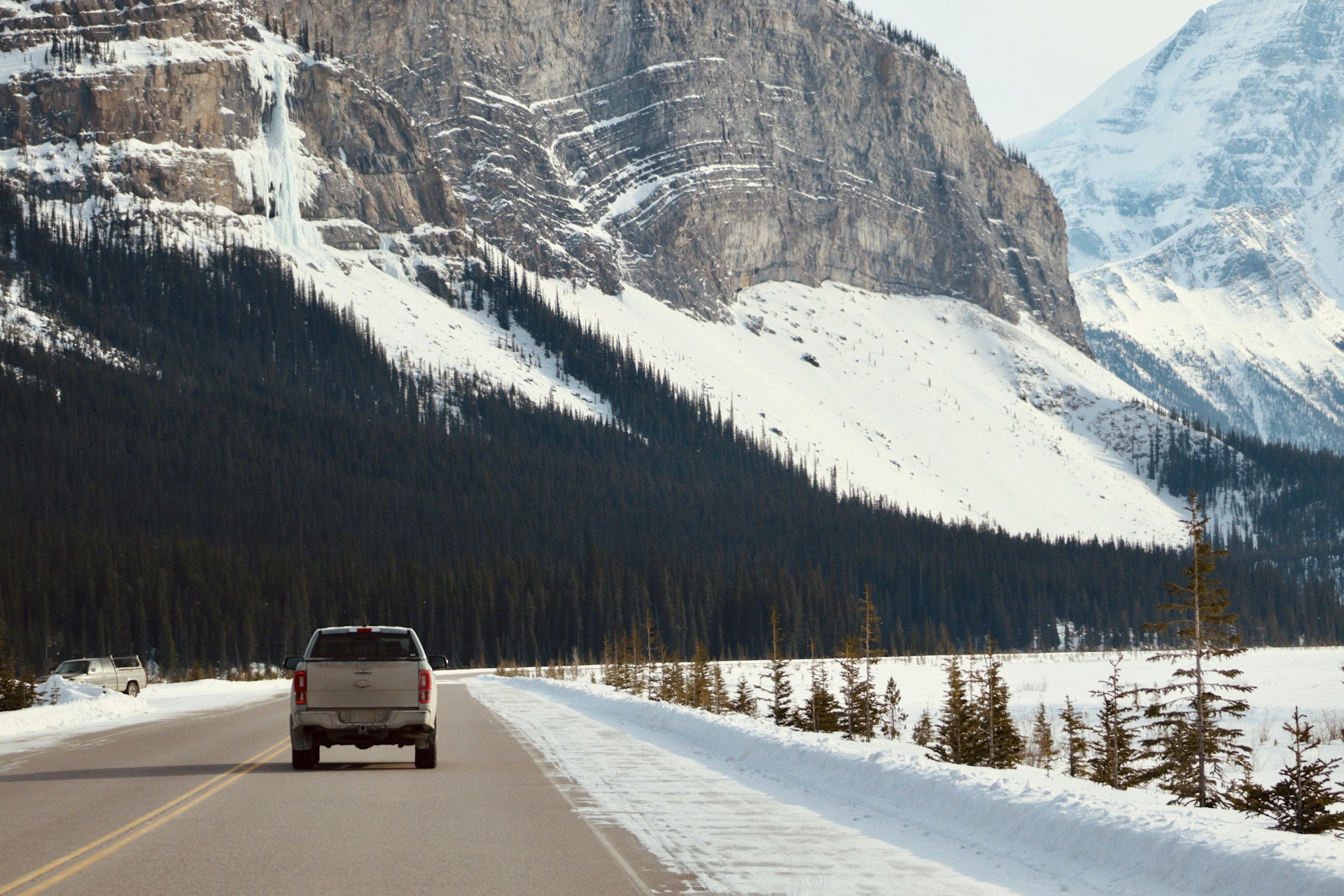
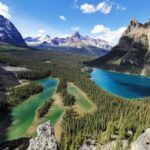
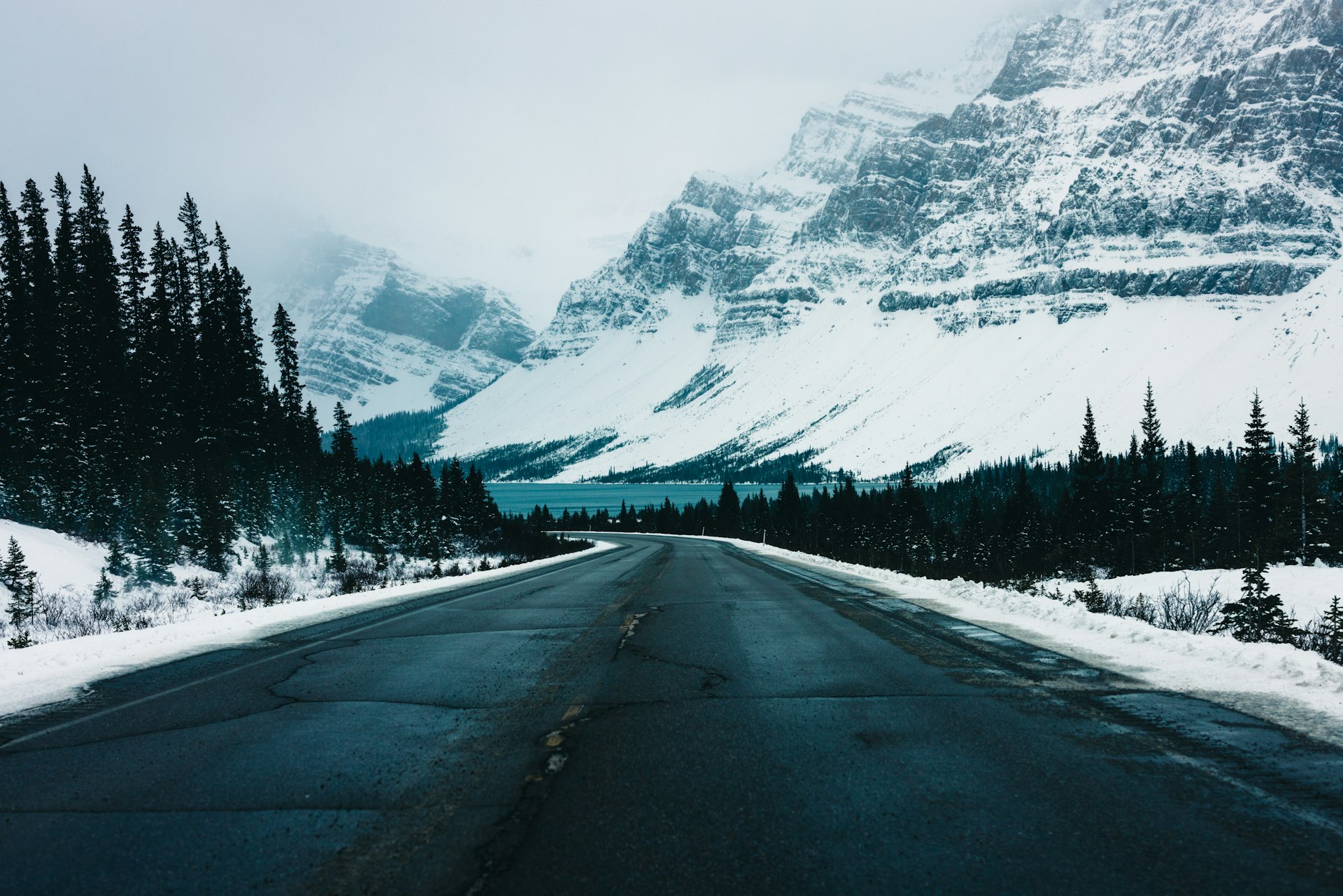
The Icefields Parkway in winter is much quieter than in summer. If you’re visiting Banff and don’t ski, I’d put the drive to Bow Lake and Peyto Lake first on your list for a clear day. The lakes are frozen, the peaks are covered in snow, and there are far fewer cars sharing the road.
It takes a little more planning than the summer drive from Banff to Jasper. Winter tires are required from November to March, and you’ll want warm clothing, food and water in the car. Decide where you’ll turn around before leaving, check the weather and road conditions that morning, and give yourself enough time to get back in daylight. I’d leave time to enjoy Bow Lake and Peyto Lake rather than spend the short winter day trying to cover the whole Parkway.
Quick facts
- Open in winter: Yes, all year, with occasional closures for avalanche work and storms
- Tires: Snow tires (snowflake or M+S symbol) or chains are mandatory November 1 to March 31
- Plow hours: 7 am to 3:30 pm, when needed. Parks Canada recommends driving in daylight
- Services: No fuel, food or cell signal between Lake Louise and Jasper, 232 km. The one gas station, at Saskatchewan River Crossing, is summer-only
- Best turnaround from Banff: Peyto Lake, with Crowfoot Glacier and Bow Lake on the way
- Park pass: Required. $12.25 per adult or $24.50 per vehicle for the day
- Road report: 511 Alberta, checked before you lose signal
As of October 2026
Is the Icefields Parkway Open in Winter?
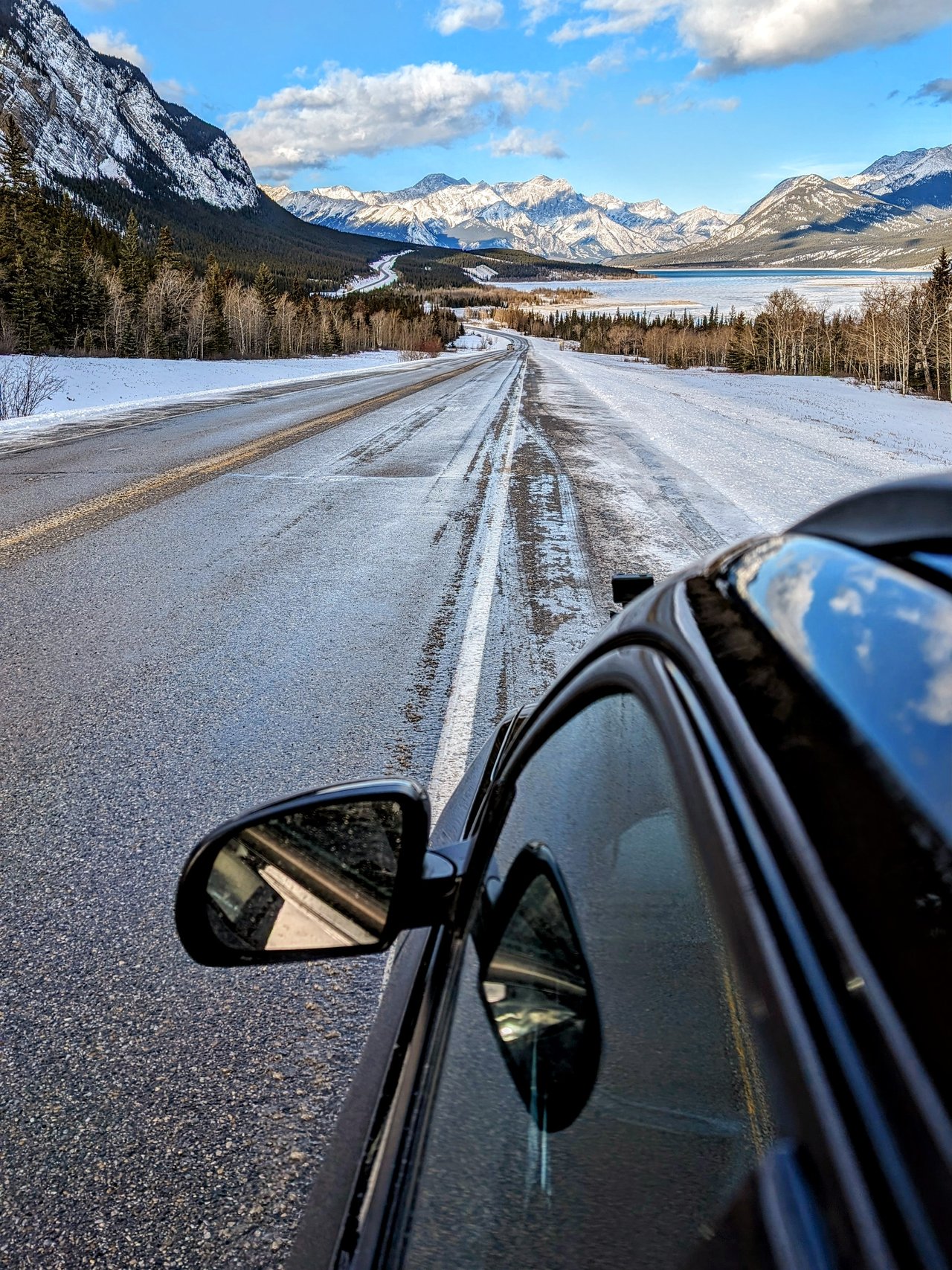
Yes. The Icefields Parkway stays open year-round, and Parks Canada plows the road as needed through winter. You do need to leave some flexibility in your plans, though. A snowstorm or avalanche control work on the slopes above the highway can close a section with little notice.
The important detail is that a closure doesn’t necessarily affect the whole Parkway. There are gates at Lake Louise, Saskatchewan River Crossing and Parker Ridge, plus three more on the Jasper side. If you’re driving from Banff to Bow Lake and Peyto Lake, a closure farther north near the Columbia Icefield may leave your route open.
The timing changes through the season, too. In early and midwinter, closures usually begin during a snowstorm, with crews carrying out their work soon after it passes. Spring closures often start around mid-morning and may lift by the evening.
Check 511 Alberta before leaving your hotel. It shows current alerts and lets you set up notifications for your route. You can also call 511 within Alberta or 1-855-391-9743 from anywhere in North America. Do this while you still have a connection, because there is no phone signal once you’re on the Parkway.
Read the details for the stretch you plan to drive, rather than relying only on the map colour. The road’s rating reflects the worst conditions anywhere along it. Sometimes that means a windy section near the Columbia Icefield, well beyond Bow Lake and Peyto Lake. Knowing where the problem is makes a difference when deciding whether your shorter day trip can still go ahead.
What Driving the Icefields Parkway in Winter Takes
If you’re renting a car, ask about the tires before you book. Parks Canada requires snow tires or chains on the Icefields Parkway from November 1 to March 31, and whenever the road is covered in snow and ice outside those dates. Look for the mountain snowflake symbol or M+S on the sidewall.
That rule doesn’t cover the Trans-Canada between Banff and Lake Louise. A rental car can meet the requirements for that highway without being suitable for the Parkway, so I’d check the tires myself when collecting it. While you’re there, make sure the car has a snow brush and ice scraper, and a full reservoir of winter washer fluid.
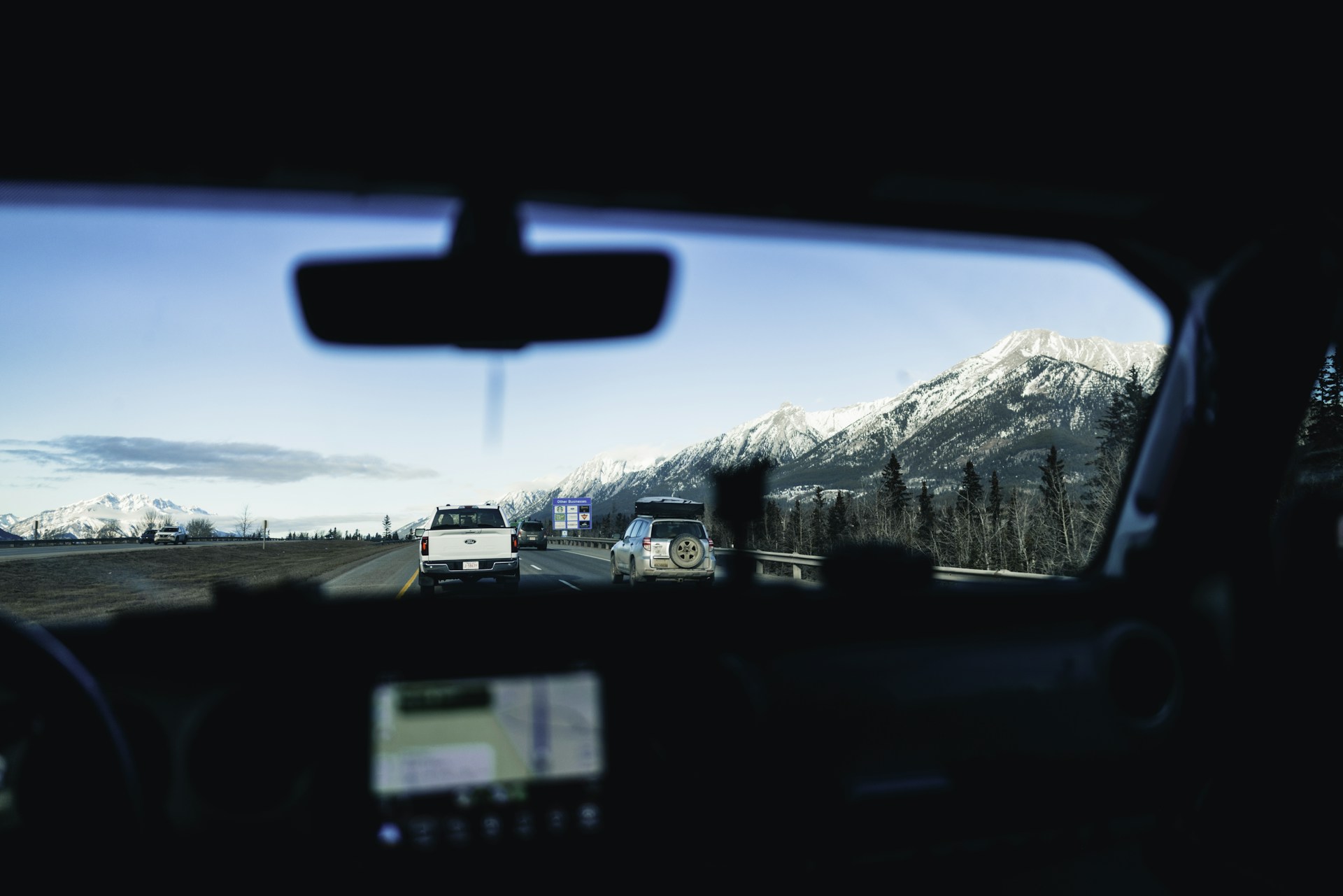
Once you turn onto the Parkway, don’t expect the same pavement you’ve just driven from Banff. Parks Canada uses a sand mix with less salt to limit the attraction for wildlife, and compact snow can stay on the road through a long stretch of clear weather. Even after a sunny week, you may still be driving on snow. Good tires help, but give yourself time and take it steadily.
An early start makes this day easier. The plows work as needed from 7 a.m. to 3:30 p.m., and Parks Canada recommends driving in daylight. I’d plan to be heading back toward Lake Louise by mid-afternoon, with the lake stops already behind you.
Fill the tank in Lake Louise. The gas station at Saskatchewan River Crossing only opens in summer, so there’s nowhere to refuel along the 232 kilometres to Jasper in winter. Put a spare jug of washer fluid in the car too.
You’ll also need a national park pass: $12.25 per adult for the day or $24.50 for everyone in one vehicle.
Be Ready for Changing Weather
Sunshine in Jasper and a blizzard at the Columbia Icefield on the same day isn’t unusual. The Parkway crosses high, exposed passes, and the weather where you start tells you very little about what’s happening farther along the road.
In Banff, the average January high is around −3 °C and the average low is about −13 °C. Dress for the colder part of the day, including the drive home if you end up returning after dark. Keep a warm layer, hat and gloves beside you in the car. Having to unpack the trunk for them at a windy viewpoint gets old quickly.
What to Pack for a Winter Drive on the Parkway
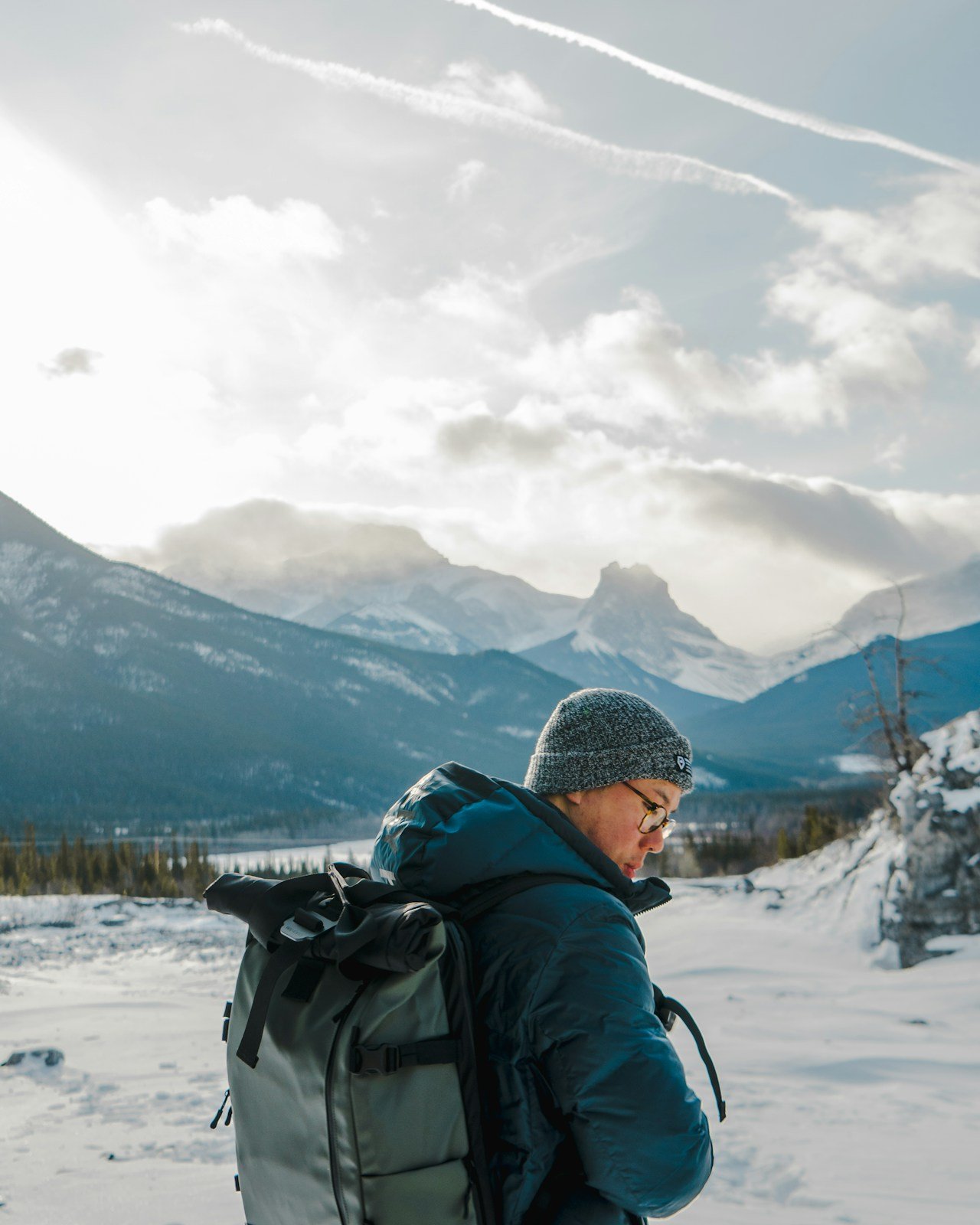
Bring enough to sit comfortably in the car for a while. A breakdown or a slide into a snowbank can leave you waiting a long time for a passing driver or tow truck. A road closure can hold you up too, even when there’s nothing wrong with your car.
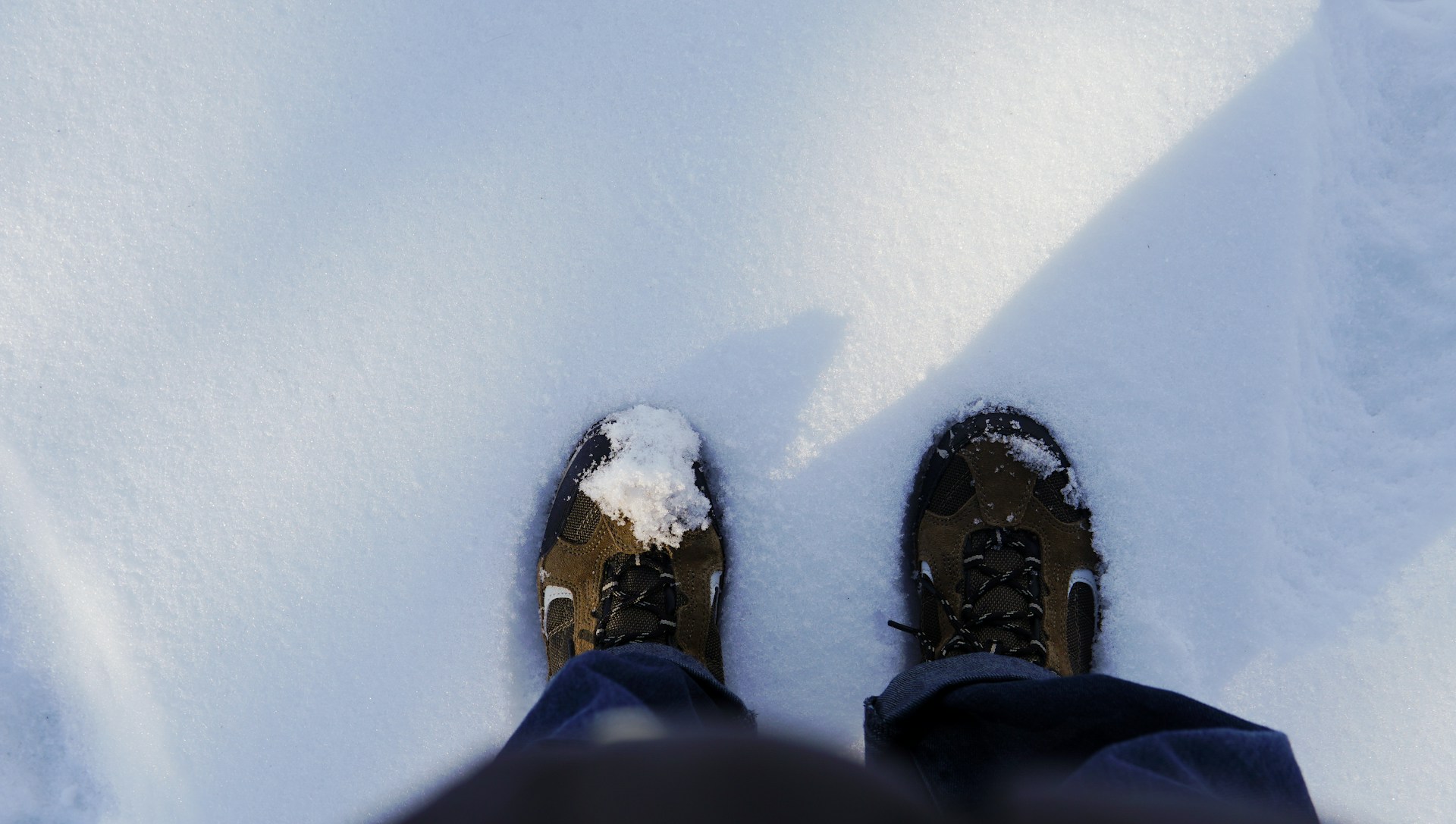
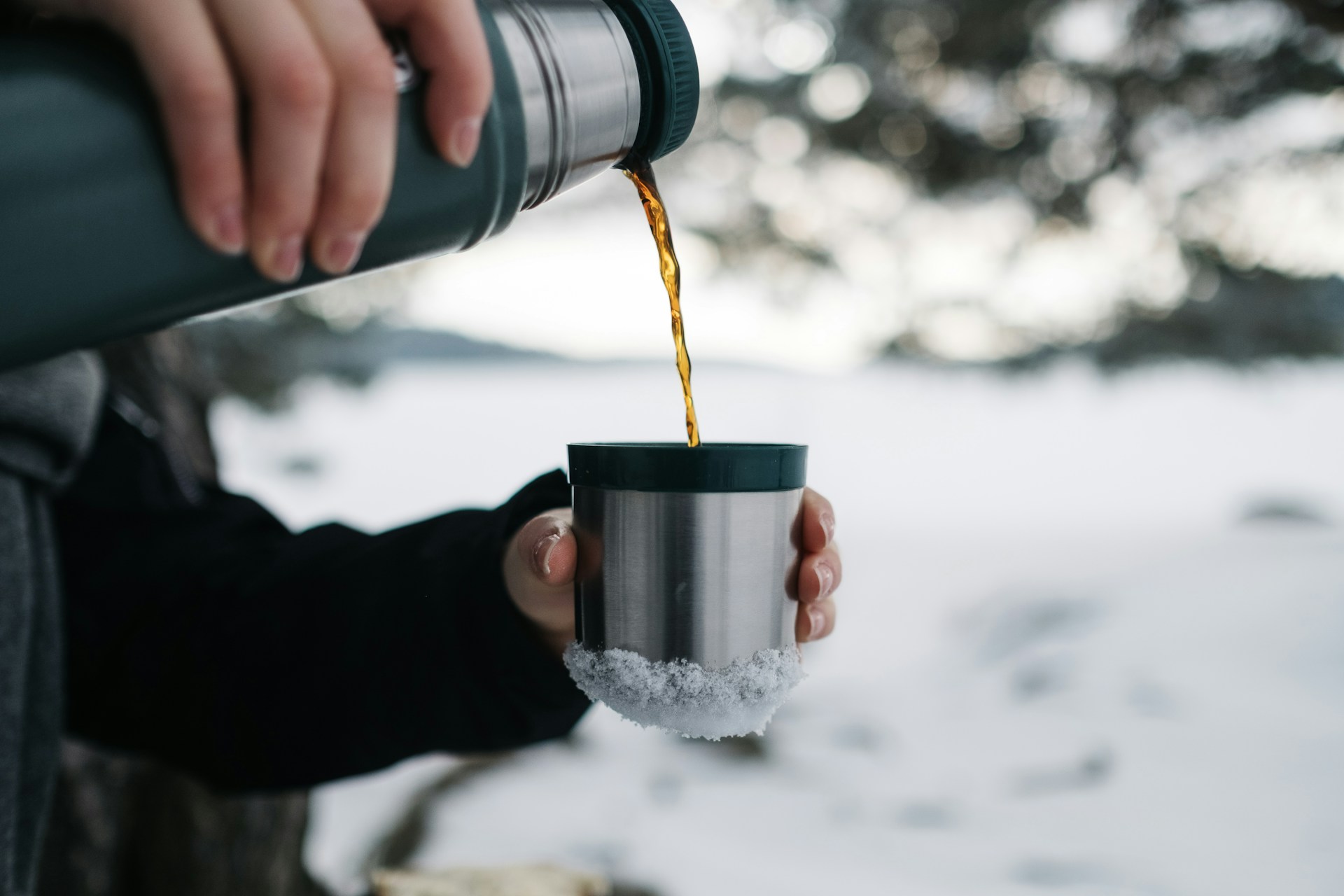
Everyone needs winter clothing: a parka, toque, mitts, snow pants and boots. Add a blanket or sleeping bag for each person. Lunch, a few energy bars, water and a flask of something hot are useful on an ordinary day out and even more welcome if you’re delayed.
Pack a flashlight or headlamp with spare batteries for the short afternoons. Candles in a deep can, with matches, can give a little light and warmth during a wait, but keep the car ventilated and the flame away from clothing and bedding. Never leave it unattended.
Along with the snow brush, scraper and spare washer fluid, bring a shovel and booster cables. Sand or kitty litter can help the tires grip if you get stuck. A first aid kit, whistle and paper road map belong in the car as well. Bring a satellite messenger if you own one, and tell someone your route and expected return time before leaving.
If you’re already worrying about the drive, a guided tour is worth considering. Parks Canada advises staying off the Parkway if you aren’t comfortable in winter conditions. There’s a winter day tour departing from Banff and Canmore that visits Lake Louise, Bow Lake and Peyto Lake, with ice cleats included. You can make the same lake stops and leave the snowy roads to the driver.
How Far Can You Drive the Icefields Parkway in Winter?
On a clear winter day, the drive from Banff to Bow Lake and Peyto Lake gives you time for the main lake stops and the walk to Peyto’s viewpoint. You can continue farther north too. The distance you cover comes down to daylight, road conditions and how long you want to spend at each stop.
| Turn around at | From Lake Louise | From Banff, one way | What you see | When it works |
|---|---|---|---|---|
| Peyto Lake | 43 km | About 100 km | Crowfoot Glacier, Bow Lake, the Peyto viewpoint | Any clear day, November to March |
| Saskatchewan River Crossing | 80 km | About 137 km | All of the above, plus Waterfowl Lakes and the Howse Pass viewpoint | From February, when the days are longer |
| Columbia Icefield | 128 km | About 185 km | The Athabasca Glacier from the road. The Icefield Centre is summer-only | Late February and March, on a settled forecast |
| Our pick: Peyto Lake in December and January. The Crossing once the days stretch out in February. | ||||
Around December 21, sunrise at Lake Louise is about 8:50 a.m. and sunset is around 4:40 p.m. That’s just under eight hours, with the peaks taking some of the light at either end. By mid-February, you have roughly ten hours, from about 8 a.m. to 6 p.m.
Allow around 45 minutes to drive from Banff to Lake Louise before joining the Parkway. Starting in Canmore adds a little over 20 kilometres each way. Leaving Banff by 8 a.m. gets you to Bow Lake with most of the daylight still available for your stops.
Continuing to the Columbia Icefield
The Columbia Icefield is about a 370-kilometre round trip from Banff. It takes a longer day, an early start and shorter sightseeing stops than a trip to Bow Lake and Peyto Lake.
The final stretch climbs toward the Icefield Centre, where high winds, blowing snow and drifts are common. You’ll pass the closure gates at Saskatchewan River Crossing and Parker Ridge along the way, so check the report for the full route before leaving.
The visitor centre is closed in winter, but you can see the Athabasca Glacier from a distance. Plan around the drive and the glacier view, with your food and supplies already in the car.
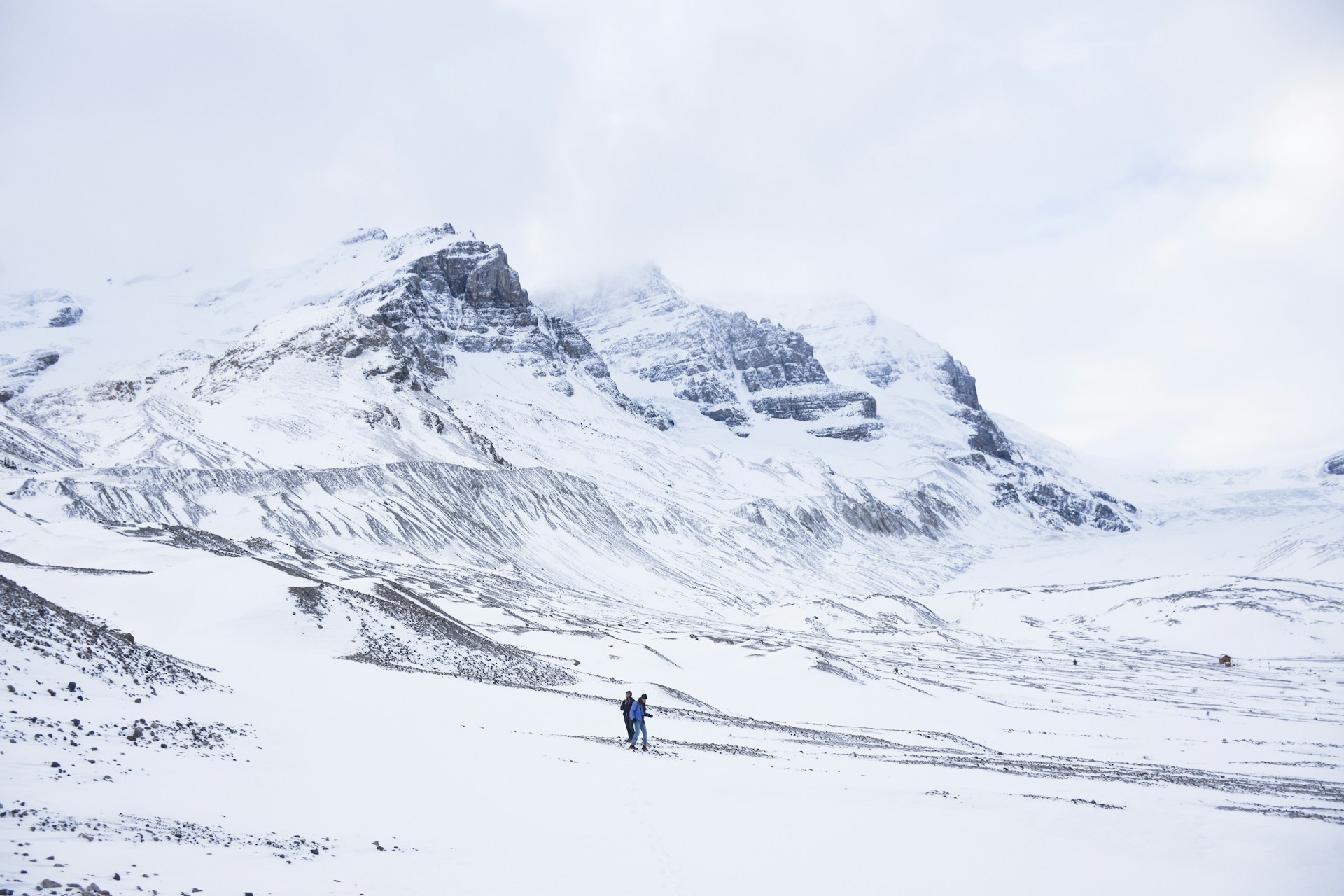
Visitors who have made the winter day trip from Canmore tell us that an early departure and keeping track of time at each stop make the day work. Bow Lake and Peyto Lake allow more time out of the car; continuing to the Icefield means spending more of the day on the road.
Where Should You Stop on the Icefields Parkway in Winter?
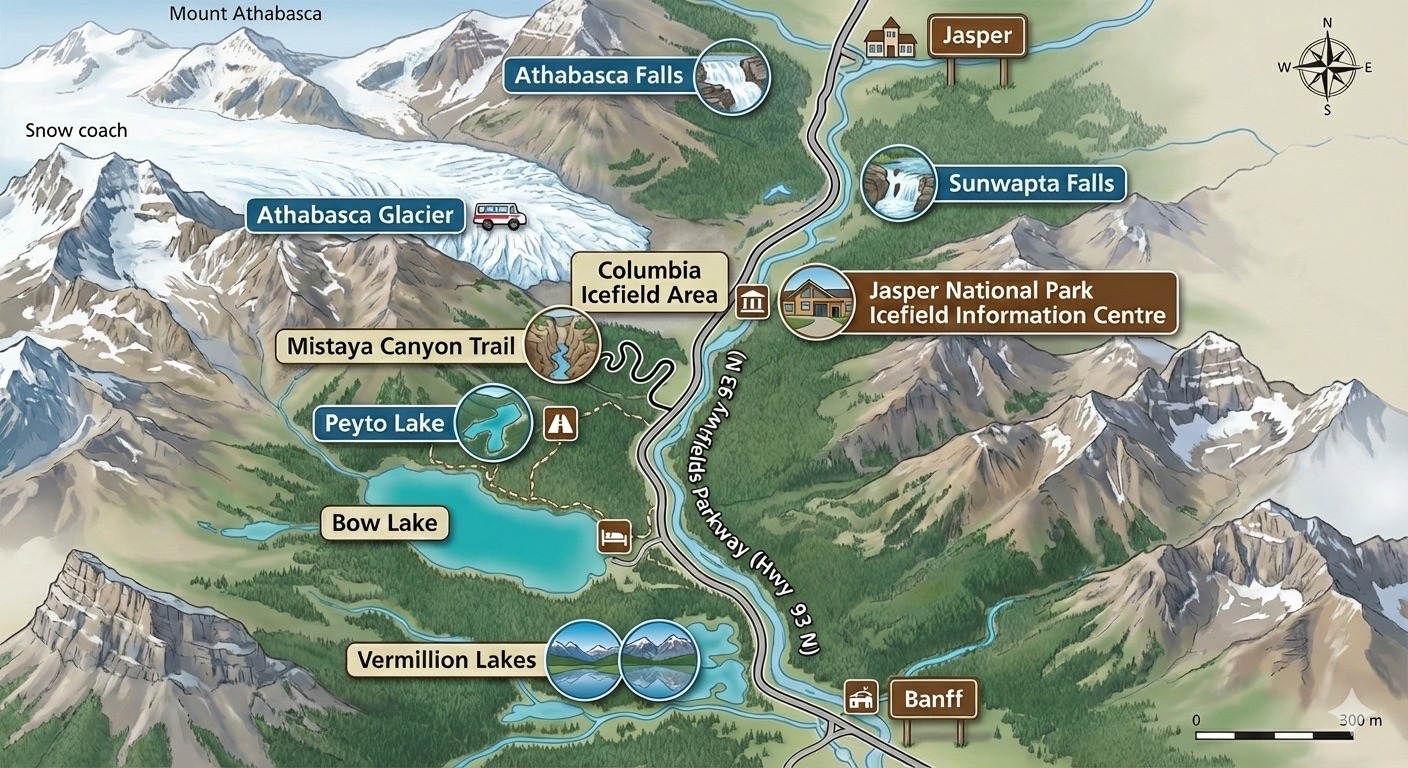
Crowfoot Glacier, Bow Lake and Peyto Lake are the main winter stops between Lake Louise and Saskatchewan River Crossing. Farther north, the Lower Waterfowl Lake and Howse Pass viewpoints give you two more places to stop.
The winter route differs from the longer summer sightseeing list. Herbert Lake and Mistaya Canyon are among the summer-only stops, so plan around the winter viewpoints and their access routes.
Watch for “no stopping” signs between viewpoints. These mark the Parkway’s 38 major avalanche paths, where you need to keep moving rather than pull over for photographs.
Crowfoot Glacier
Crowfoot Glacier comes first, 36 kilometres from Lake Louise. A large pullout beside the road makes this an easy stop before continuing to Bow Lake.
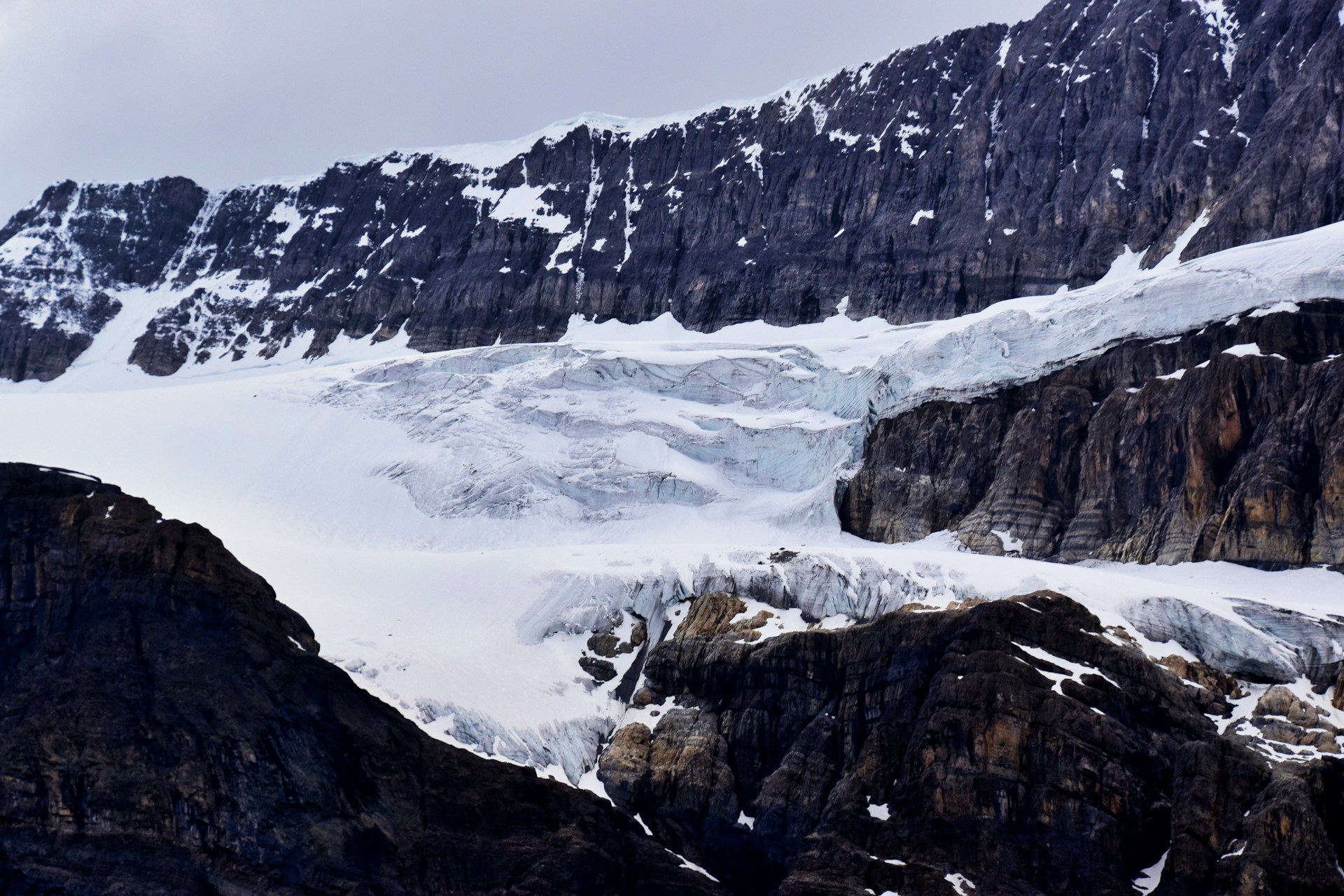
A century ago, the glacier had three toes and looked like a crow’s foot. One toe has melted away, and the middle one is gradually disappearing. Knowing that history helps you make sense of both the name and the shape you see today.
Bow Lake
Bow Lake is three kilometres farther along. Its parking lot stays open all winter, and a short trail leads down to the shore.
In summer, the blue water sits beneath Bow Glacier and the Wapta Icefield. In winter, the lake is covered in ice and snow, with the same mountains rising above it. Allow some time to walk to the shore rather than taking all your photographs from the parking area. It’s noticeably quieter down by the lake.
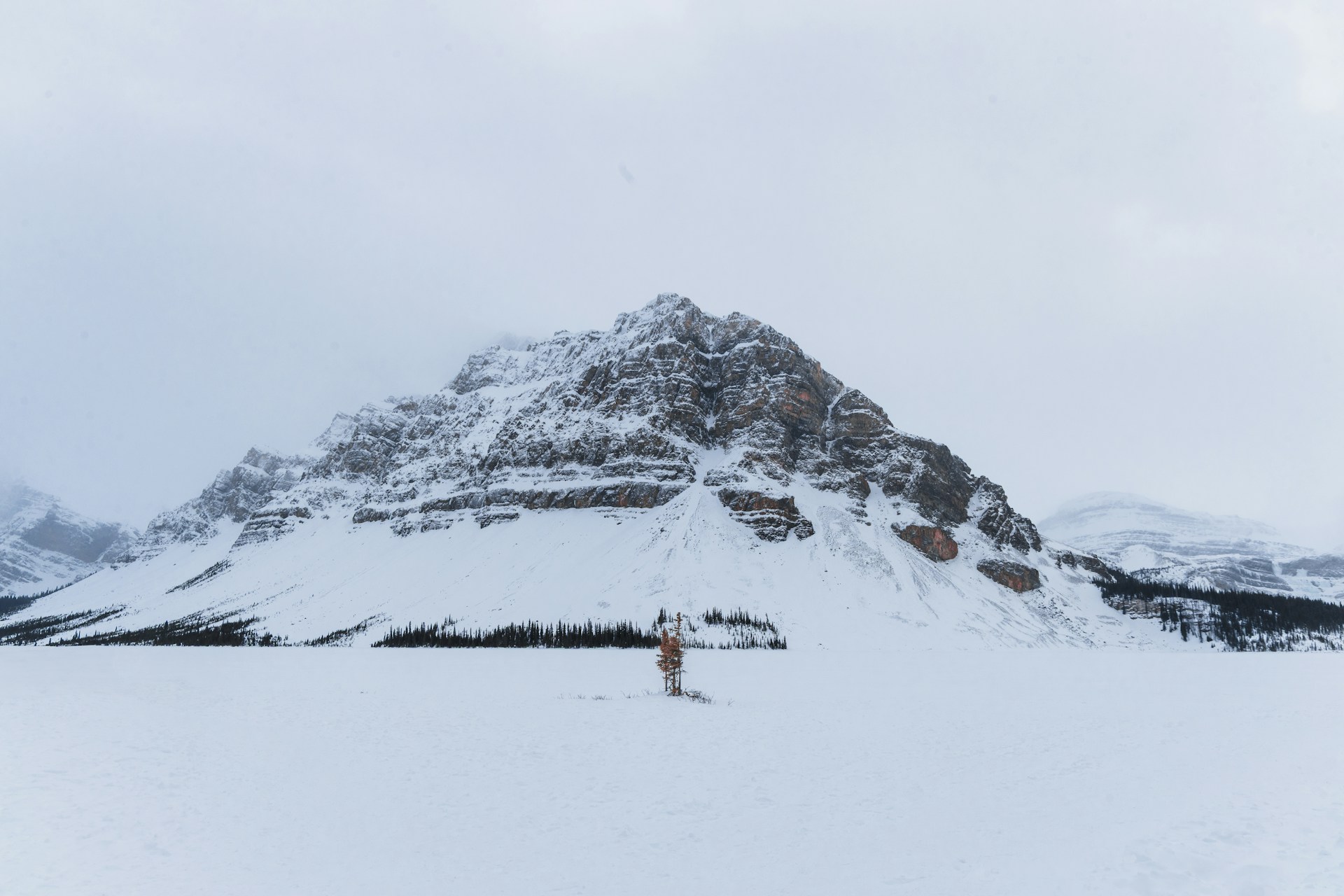
The red-roofed lodge on the shore opens for a winter season from the end of January to early April, Thursday through Monday. Before that season begins, the lodge is closed, so plan your coffee and washroom stops elsewhere.
Peyto Lake
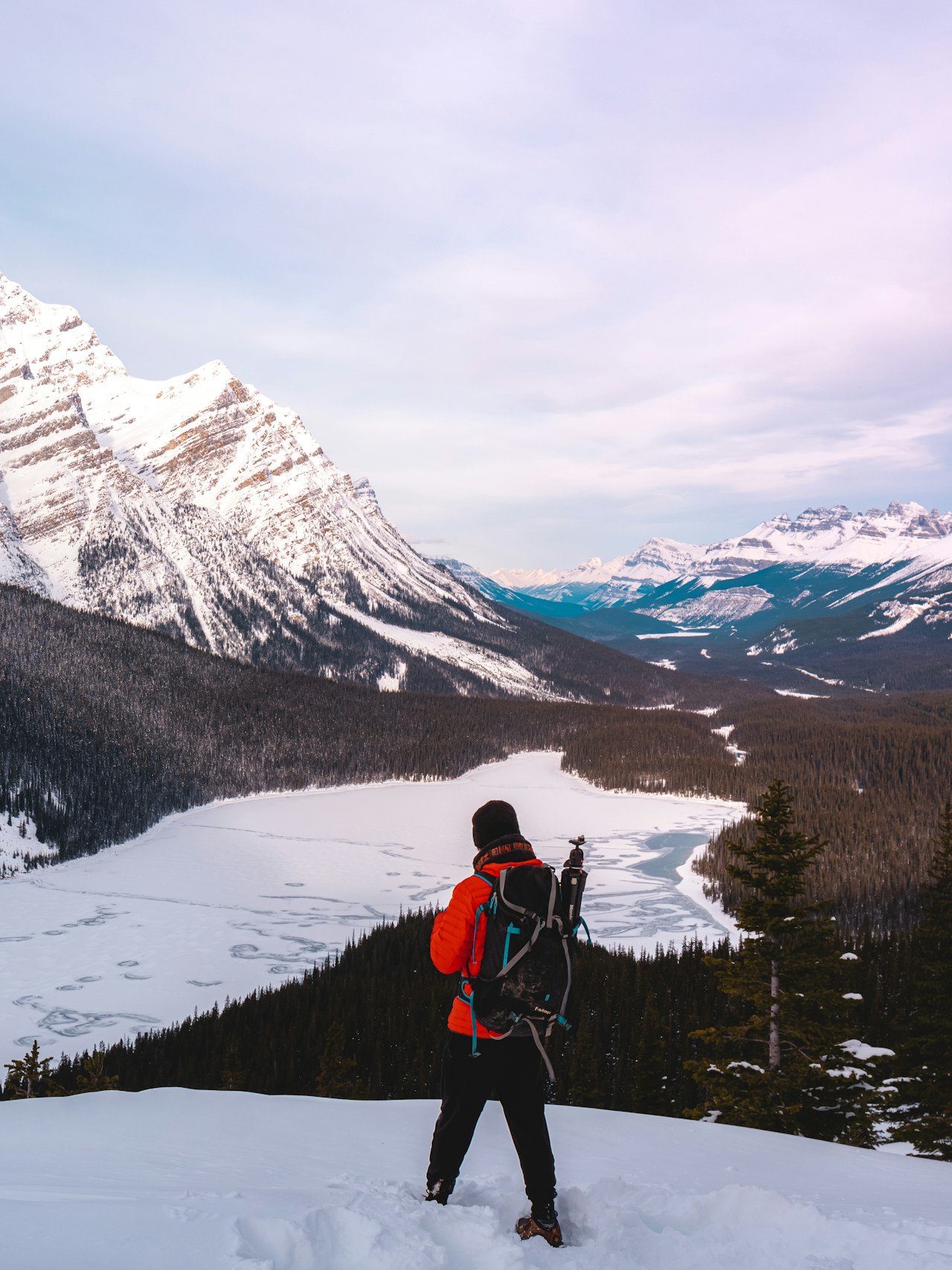
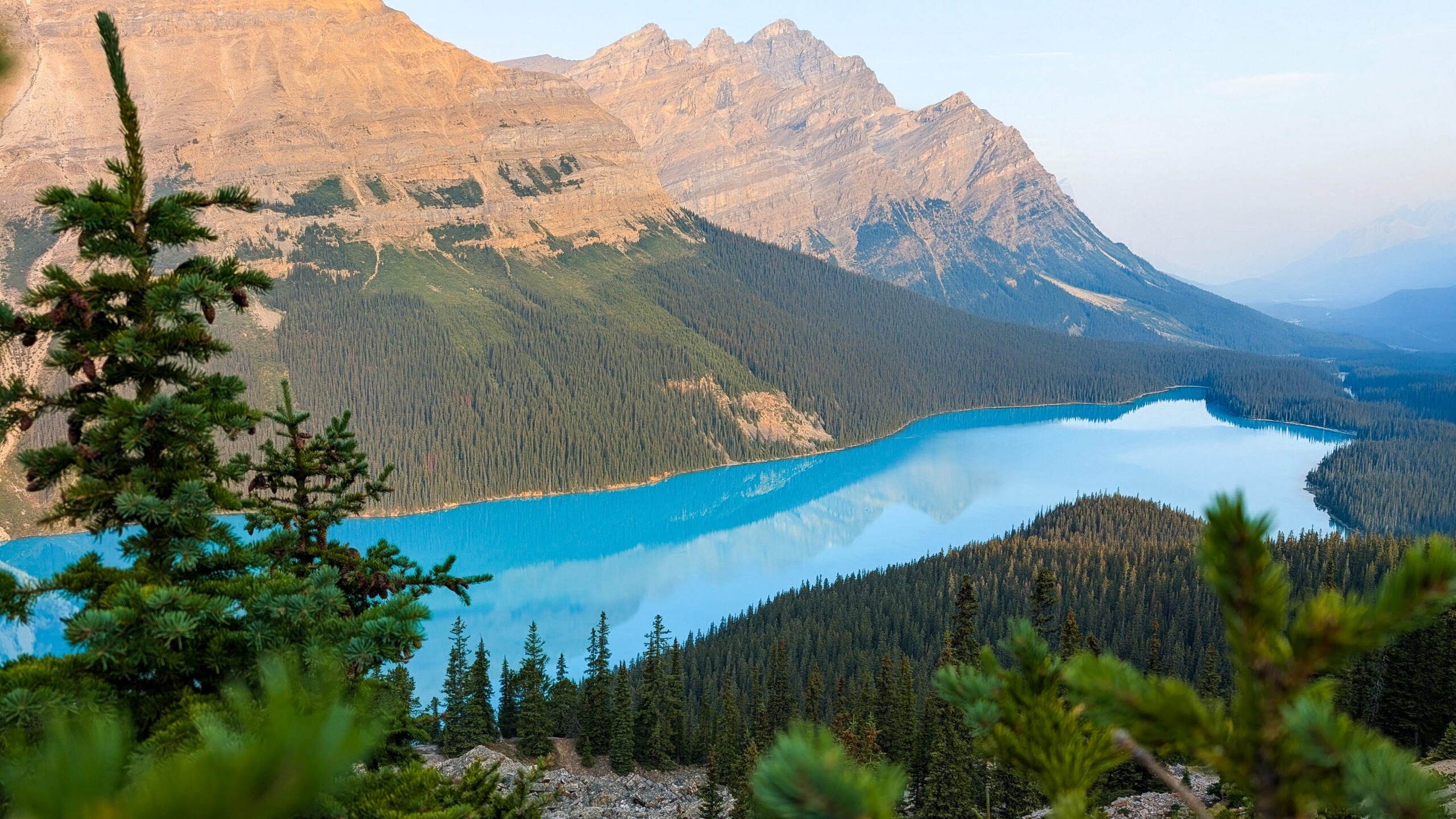
Peyto Lake is four kilometres past Bow Lake. The upper road to the viewpoint isn’t plowed in winter, so the visit includes a walk from the main parking lot.
You can follow the snow-covered road or take the trail from the north end of the lot. The route is 1.2 kilometres there and back, with a gentle 25-metre climb. Bring snowshoes and allow around 45 minutes.
Recent snowfall makes a difference here. After a few days without fresh snow, other visitors have usually packed down a firm path, and ice cleats may be enough. After a heavy snowfall, expect deeper snow, slower progress and a route that can be harder to follow through the trees. Snowshoes are useful in those conditions, and you’ll need extra time. If there’s no packed route and you only have boots, adjust the walk to suit the conditions.
Peyto’s summer colour is hidden beneath ice and snow until the thaw. The winter view is the valley, forest and surrounding peaks covered in white, often with far fewer people at the lookout.
Stay on the designated viewpoint route. Avalanche season runs from November to June, and Parks Canada’s winter brochure warns that even a short walk away from a parking area can enter dangerous terrain. Exploring beyond the viewpoint requires separate avalanche planning; consult Parks Canada’s avalanche bulletin.
Lower Waterfowl Lake and Howse Pass
With enough daylight and suitable road conditions, you can add these stops beyond Peyto Lake.
Lower Waterfowl Lake is 60 kilometres from Lake Louise. The viewpoint is beside the road, with a wall of peaks behind the lake, so it fits easily into a longer drive.
Howse Pass is at 79 kilometres, just before Saskatchewan River Crossing. A flat, 200-metre walk takes you to a view across two river valleys. It’s a convenient place to stretch your legs before returning south.
Wildlife Along the Road
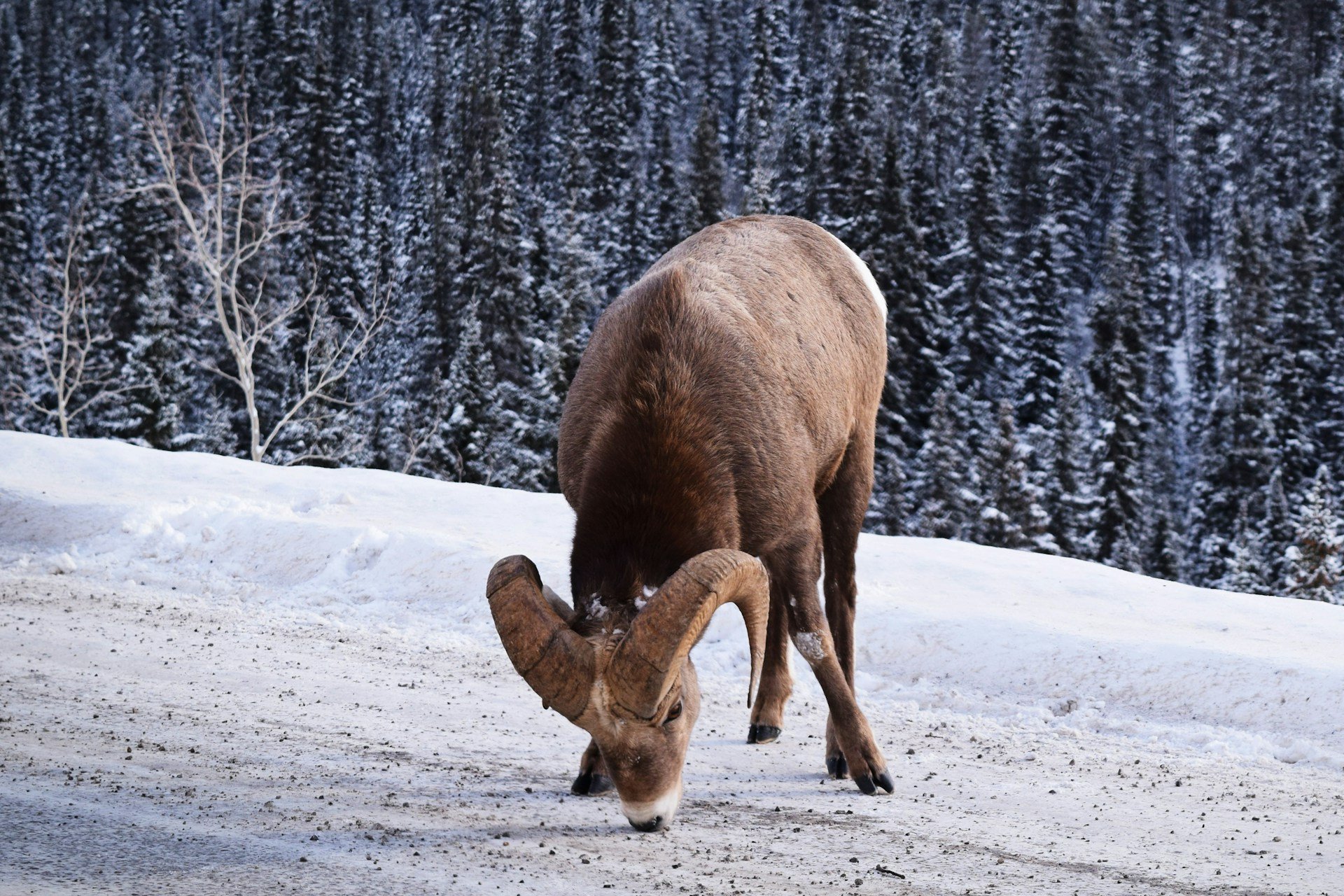
Bighorn sheep, mountain goats, coyotes and deer are regular winter sightings along the Parkway. Sometimes they’re right beside the pavement, so keep watching the road edges between stops.
Slow down, remain in the car and keep at least 30 metres away. Leave the animals room to move, including across the road.
Fitting the Parkway Into Your Banff Winter Trip
Keep the clearest day for the Icefields Parkway if your schedule allows. That gives you the best chance of seeing the peaks around Bow Lake and the full valley from Peyto’s viewpoint.
Lake Louise fits into the same day because you pass it on the way out and back. Choose either the morning or the return journey for a lakeshore walk, and include that time when planning your turnaround.
The hot springs and an afternoon around Banff work well on a cloudier day. Our guide to things to do in Banff in winter has more ideas for the rest of your visit.
Emerald Lake works well as a separate day trip. It lies west of this route, across the provincial border in British Columbia, where winter tires or chains are required on the Trans-Canada from October 1 to April 30. Our Emerald Lake day-trip guide covers the parking and timing.
Weather and Seasonal Changes to Plan Around
A clear winter day is ideal for this drive, so having some flexibility helps. Heavy snow affects the driving, while low cloud can hide the mountain views. If either is forecast, you can spend the day around Banff or Lake Louise and move the Parkway drive to another day.
Johnston Canyon’s usual winter ice walk has different access for winter 2026–27. The main trail, P1 parking lot and washrooms are closed from October 13, 2026, for rock-slope work. The Upper Falls and Ink Pots remain reachable from the Moose Meadows trailhead. Check Parks Canada’s winter walking page when planning that outing.
Snow can fall on the Parkway at any time of year. The tire rule applies whenever the road is covered in snow or ice, including before November 1. If you’re arriving in autumn, our guide to Lake Louise and Moraine Lake in October explains what is still running during that transition.
Frequently Asked Questions
Can You Drive From Banff to Jasper in Winter?
Yes, whenever the road is open. Allow the whole day for the journey, leave at first light and keep sightseeing stops short. Aim to arrive in Jasper by mid-afternoon.
Check the road report that morning, including any closures farther north. If the Parkway closes, the alternative route runs through Calgary and Edmonton on Highway 2 and takes about seven and a half hours from Banff.
What Is the Best Winter Month to Drive the Icefields Parkway?
March gives you the most daylight of the winter months: close to twelve hours, compared with about nine in mid-November. That leaves more time for stops and walks while keeping the driving within daylight hours.
What Happens if the Parkway Closes During Your Drive?
Gates close off the section that needs work. Depending on your position, you may be able to turn back or need to wait for the road to reopen.
On the stretch to Peyto Lake, only the Lake Louise gate sits between you and the highway. Farther north, there are additional gates, and a closure may mean waiting. Keep blankets, food and a flask of something hot in the car so you’re prepared for a delay.
Pack the car the evening before, check the conditions in the morning and leave yourself time at the stops you most want to see. For the rest of your visit, our three-day Banff itinerary includes winter swaps for each day.
Leave a Reply